Leaving Laurenzana and heading east through the mountains made for a surprisingly easy drive. I’d been told to stop and see Castelmezzano or the ghost town of Craco, abandoned after earthquakes and landslides forced residents out. But with a tight schedule and after seeing the precarious roads leading to those hillside villages I continued straight to Matera. A city touted as one of the oldest in Europe would surely offer more than enough photo opportunities and ancient crumbling stone to satisfy me.
My contact at Casa Natali hadn’t responded to my messages about check‑in or parking for weeks, and since Matera is known for restricted parking zones, I would’ve appreciated some clarity before arriving. After circling anxiously around what I’d been incorrectly told was a public lot with shuttle service into the ancient city, I finally received a call from Roberta with directions to parking just outside my flat. As it turns out, the property is a block from the historic Sassi, so no special parking was needed.
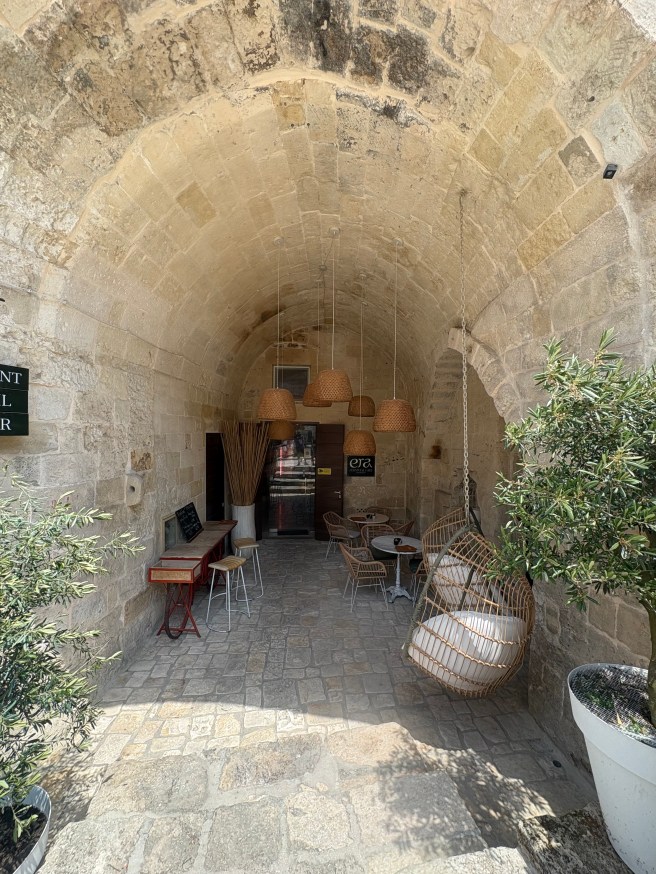
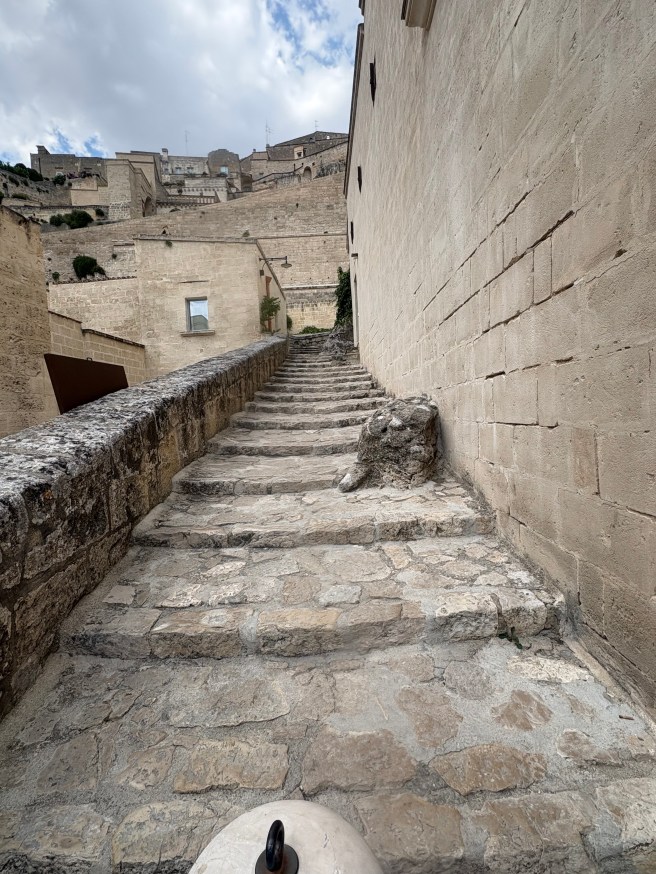
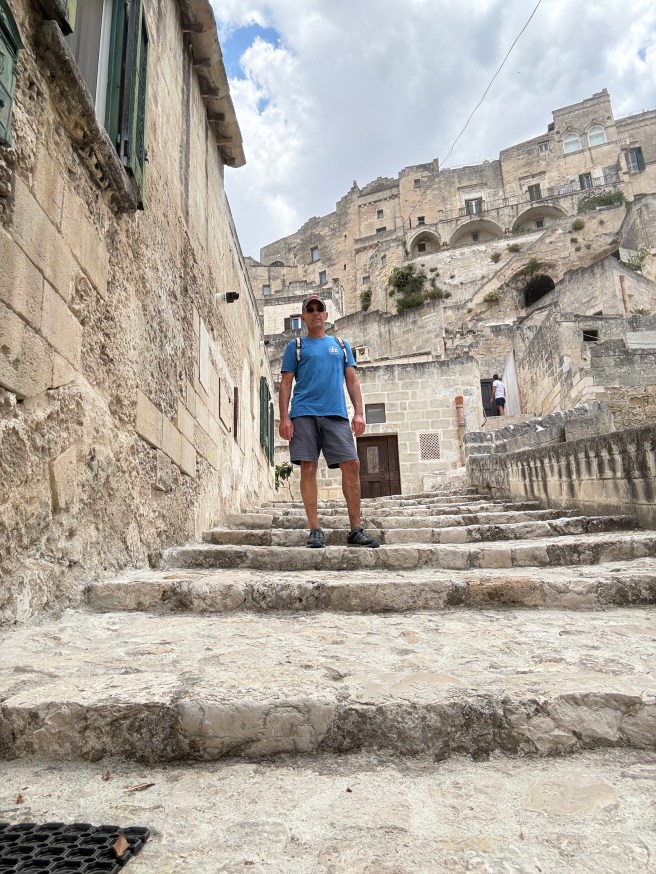
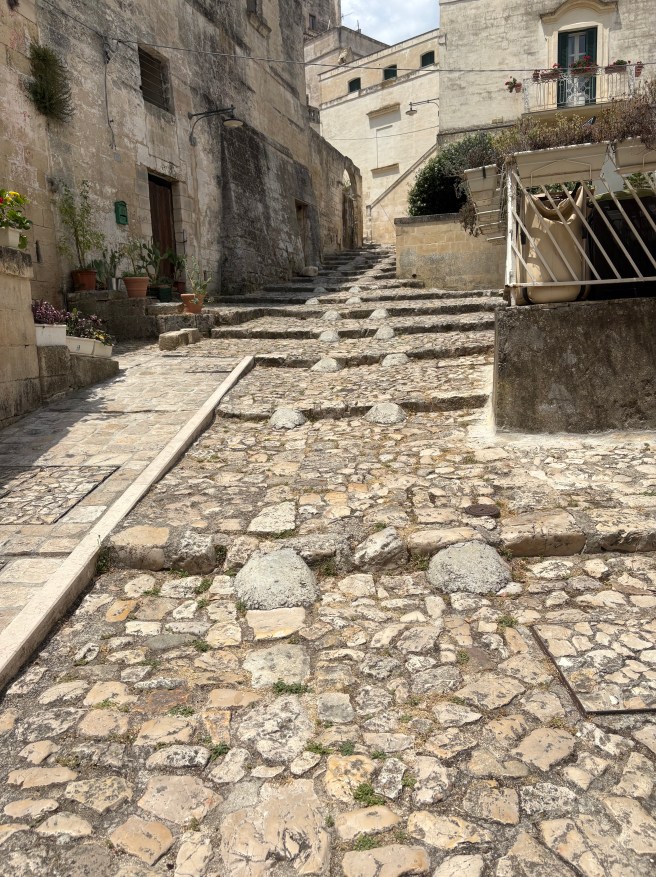
A quick tour of the room, a review of interest points on a map, and I was on my own. After a short refresh, I hit the streets, the inclines, the staircases, the winding alleys dotted with shops and restaurants. In true Italian fashion, if there’s an alley, there’s outdoor restaurant seating. The Sassi has plenty of visitors, but it’s spread out and lacks the congested energy of Tropea. People speak more softly here, as if honoring hallowed ground. Dinner still involves the tourist ritual of the dance of the hundred menus, while daytime bars stay occupied by a few beer or spritz drinkers and the devoted espresso crowd keeping their daily ritual alive.
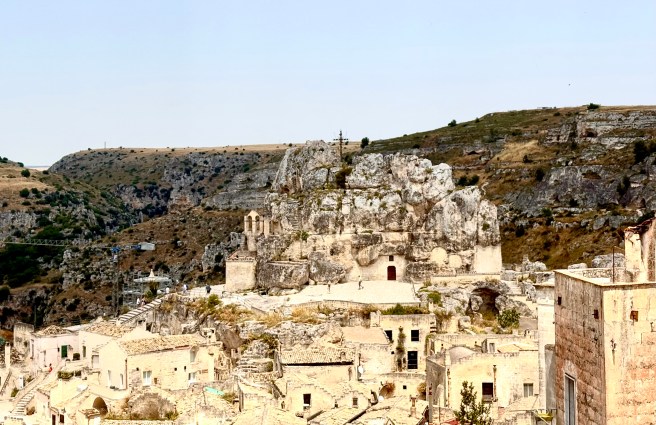
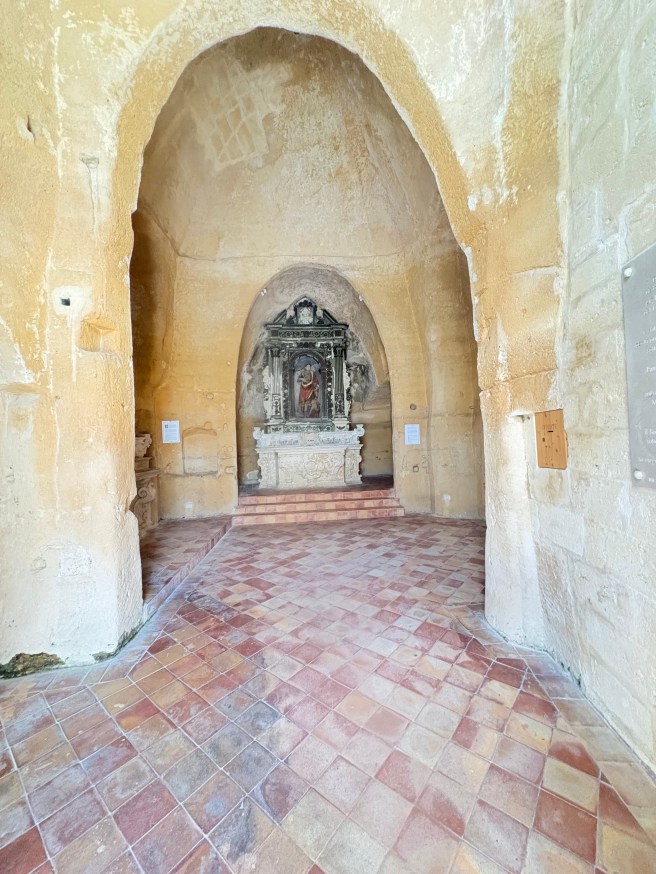
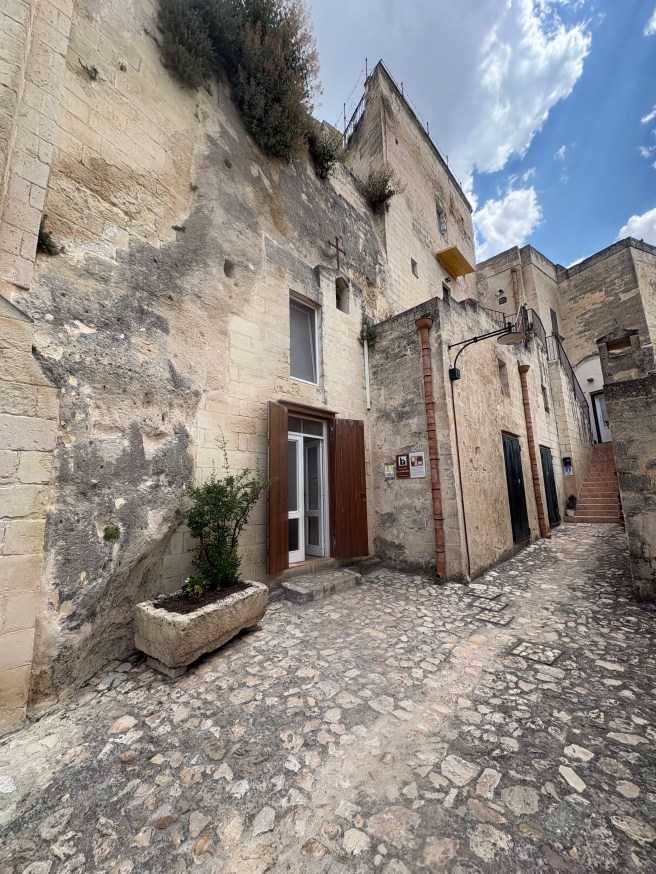
Modern Matera is a bustling local town, but the Sassi; carved from stone and dating back to the era of the Caesars feels like a world apart. Random cars, tour buses, motorcycles, and scooters creep through the single narrow corridor, dodging pedestrians and each other. Church bells echo throughout the day from the many ancient churches. Having skipped lunch, which s a ma to be my new travel day routine, I found a small bistro in the center of the old city and ordered a Moretti and a trio of bruschette to hold me over. I befriended a young Nigerian waiter who explained the layout of the town and, in the days that followed, tried repeatedly to lure me back to his restaurant.
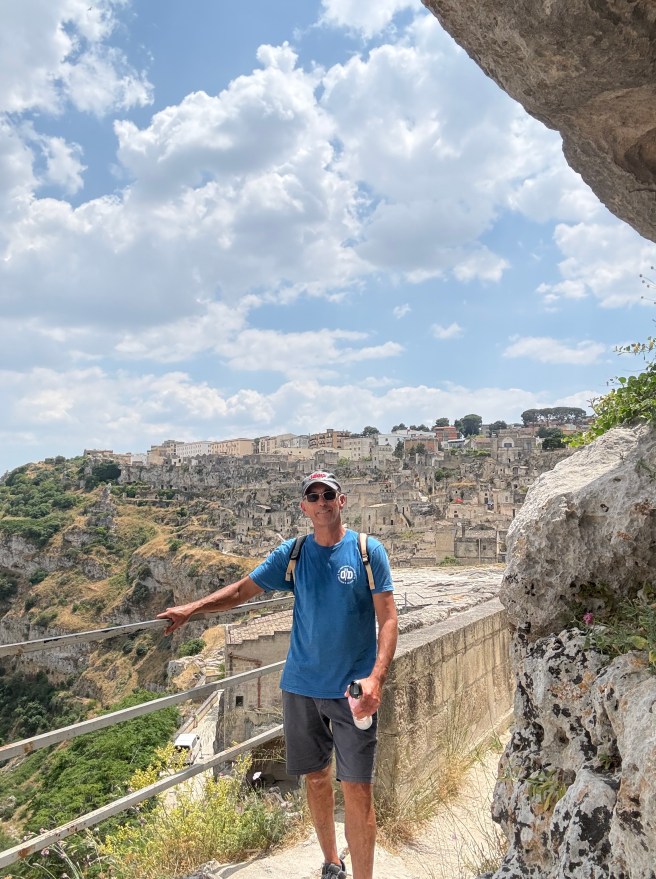
Standing at the edge of the Sassi, looking up at the houses, shops, and restaurants carved into stone, then across the valley at the prehistoric caves that sheltered Matera’s earliest inhabitants, the town felt like the grandfather of all the old places I’d visited.
After a shower and a reset, I returned to the Sassi for dinner and chose Nexi, the third restaurant on the block. As a chef, I immediately noticed the shift in ingredients, Matera’s menus lean toward the land rather than the sea: lamb, veal, pork, and steak, often labeled “alla Materana.” It felt as if one chef wrote the menus for the entire town and everyone else followed suit. Radish mousse appeared everywhere, as did broccoli rabe and bean soup. Pizza existed, but not with the same enthusiasm as in my previous destinations. Still, Matera offered an elevated dining experience within the familiar twenty‑to‑twenty‑five‑euro range.
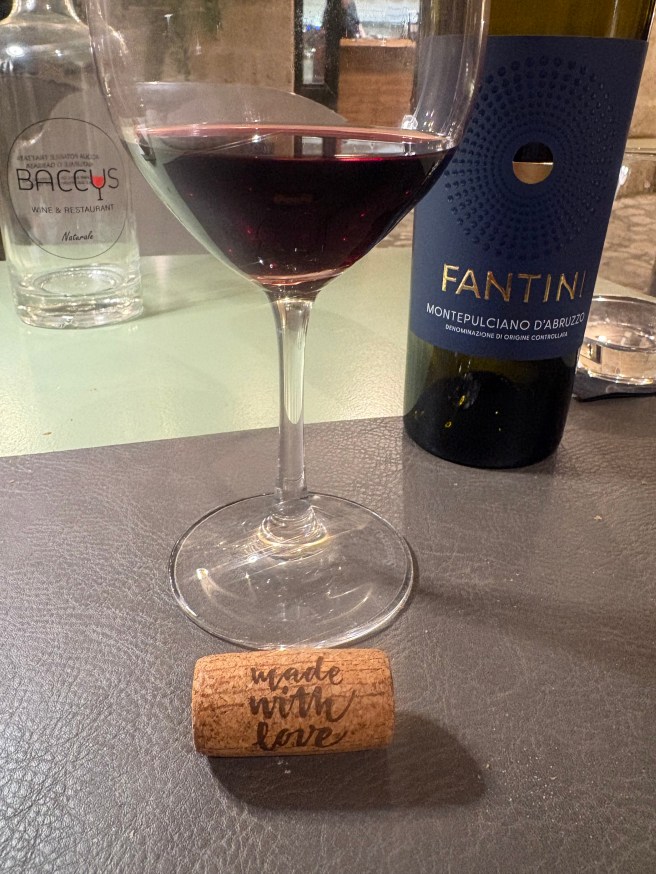
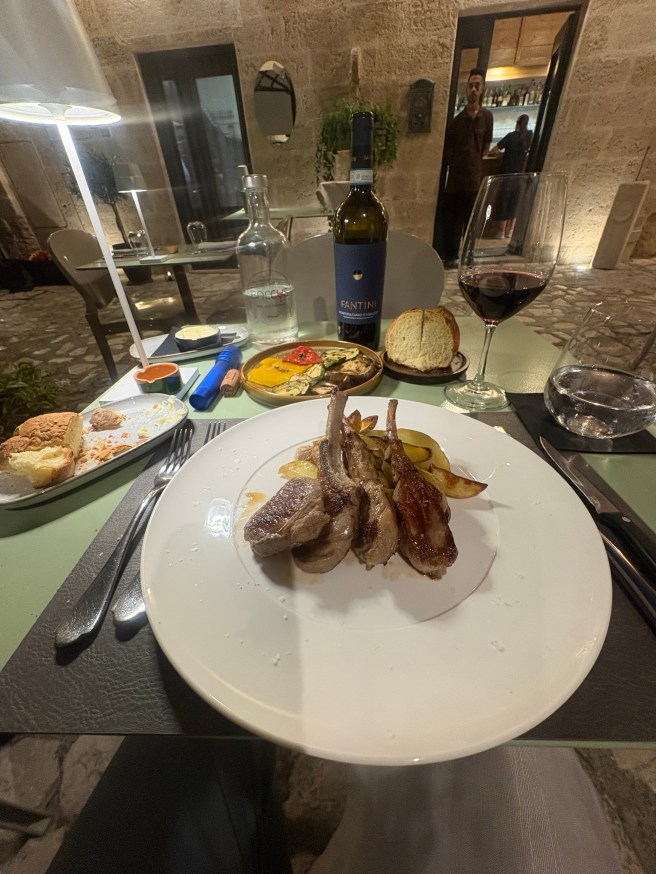
My first dinner was a roasted lamb rack with a “baked potato” — which here means roasted sliced potatoes and a bottle of local red wine. The lamb arrived without sauce, which surprised me, but it was flavorful nonetheless. I chatted with a couple from Holland at the next table, swapping stories of our Italian travels and our hometowns. Somehow, I still found room for an espresso and the now‑standard tiramis in a glass. With restaurants serving as the main nightlife, I returned to my room and slept fat and happy.
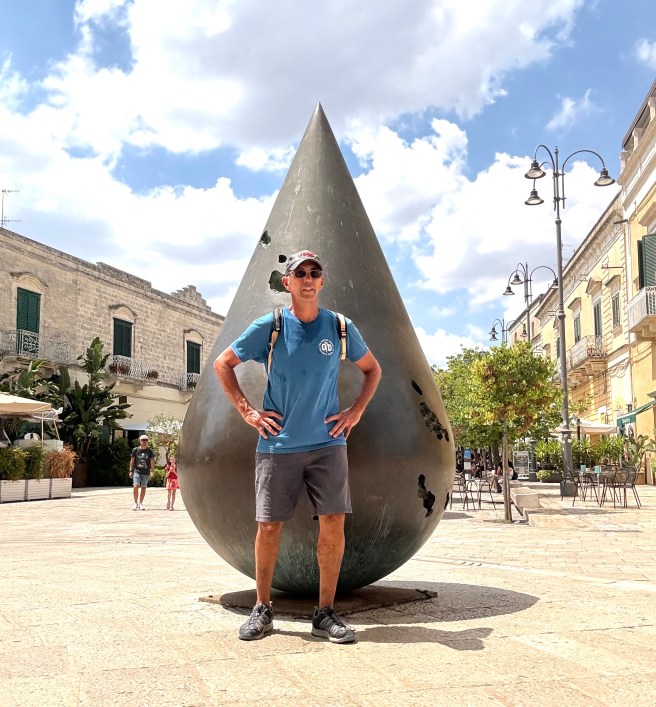
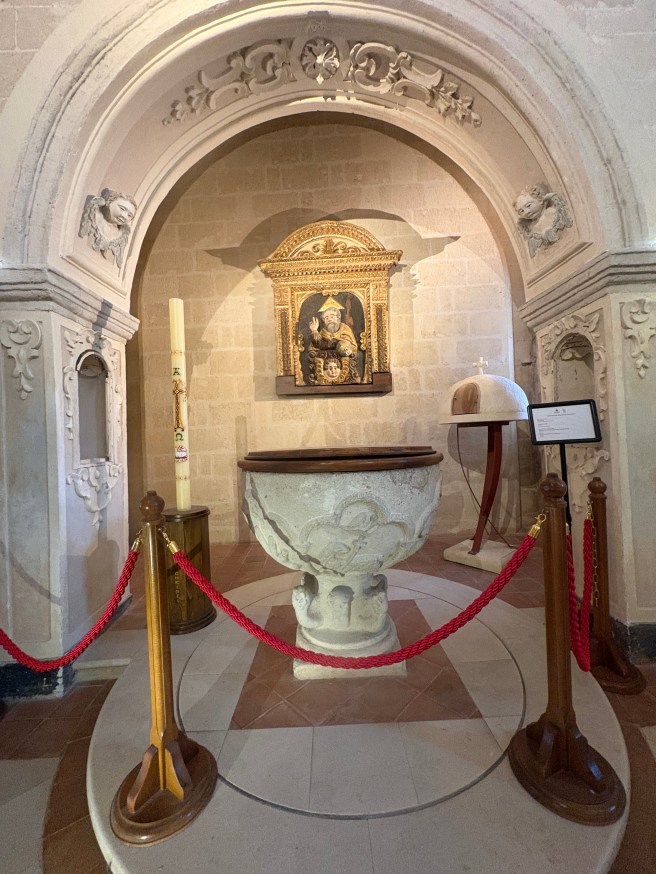
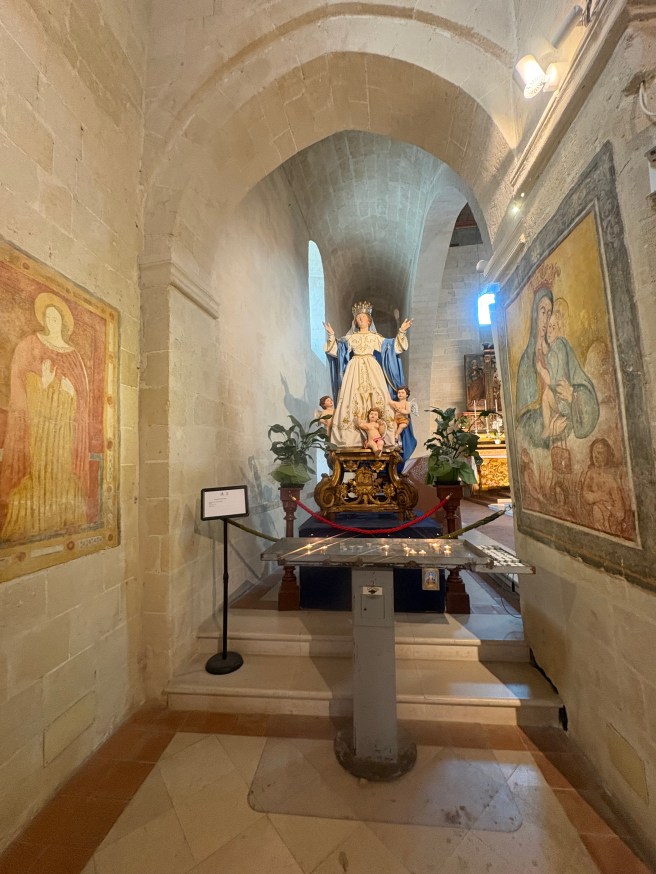
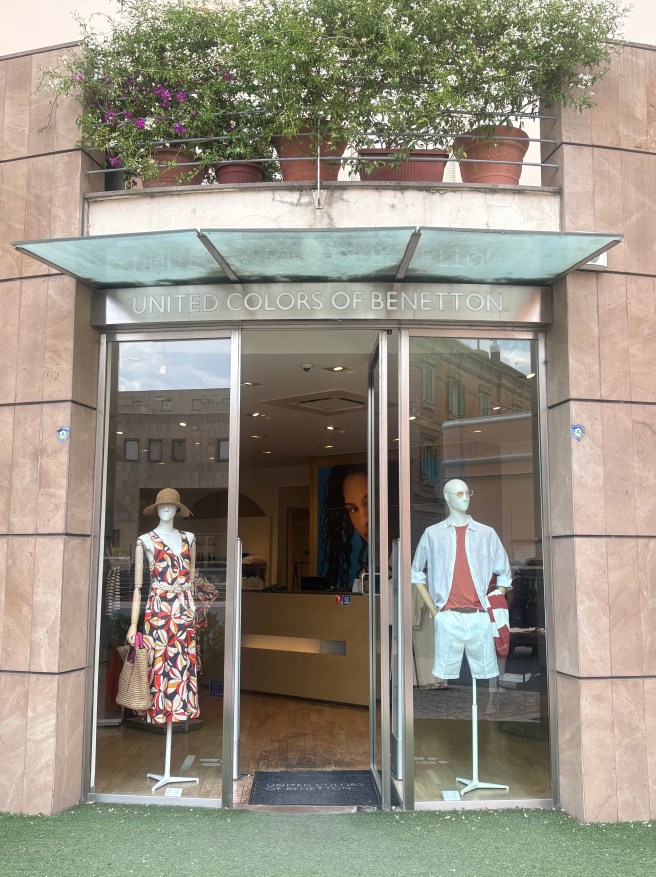
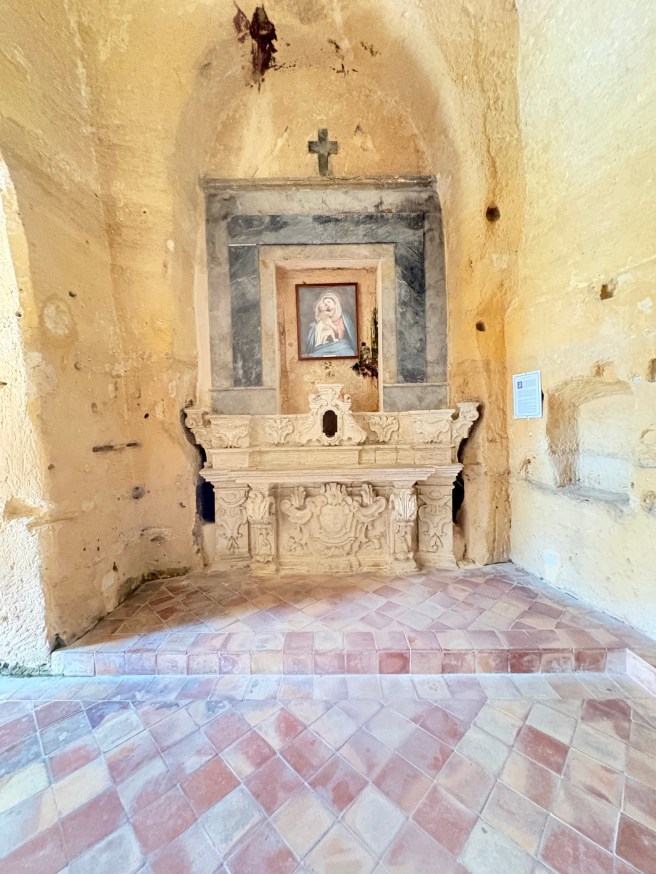
The next morning brought yet another sunny Italian day. I brewed a cappuccino in the room and headed out to walk the Sassi. At the top edge where old meets new, the piazza opened into a festive space lined with arched lights, upscale shops, and vendor stalls. To my surprise, I spotted a United Colors of Benetton, a store I hadn’t seen since the early nineties. Two ancient churches stood guard over the square, a reminder that Italy never runs short on sacred architecture. Despite the heat wave, sticking close to the stone walls kept me cool as I explored. I grabbed a ham‑and‑cheese panini and some fruit from a local stall, which came in handy later as I hiked to the top of the Sassi.
Finding hidden gardens, terraces, and overlooks became a game. The giveaway was always the expression on the faces of people coming from the opposite direction, if they looked amazed, I took that path. Even a house under renovation, with ancient stone blocks and rustic beams stacked outside, became a photo opportunity.
Italy is not an early‑dinner country. After showering at five, I returned to the Sassi at six‑thirty to find the restaurants still empty. I made the mistake of ordering a beer and bruschette at a retro little bar with a great view and classic reggae playing , where I discovered Calypso Rose and Sister Nancy on the play list. I passed some time writing in the square, building up an appetite and waiting for the restaurants to fill.
Eventually I returned to Nina Rossa, torn between the veal shank and the slow‑cooked pork shank. The waitress recommended the pork because it was larger, and while delicious, halfway through I knew the earlier bruschette would be my kryptonite. Don’t worry — I’m not wasteful. I finished the tender pork with its pan sauce and roasted potato, but dessert was out of the question.
A short walk through the Sassi brought me to another sunset over another Italian day. I headed back to rest, tomorrow plan is to cross the valley and explore the caves, a journey that would require strength, patience, and a clear head.