With only a few days under my belt in Tropea, as any of my former co-workers will tell you, I take ownership of my surroundings. My surveillance upon arrival was key. Google kind of targeted my B&B but from here out it is up to my navigation sense or there lack of to negotiate my surroundings and or find my way home. Some might question a solo journey but for me it’s the advantage of barnstorming my current location. I’m never tired under these circumstances. I won’t have a headache, I will always feel up to explore and maybe bend the rules although I am also cautiously curious.
Even when writing these observations from a park bench in Vietri Sul Mare or a quaint restaurant table in Tropea, I am always taking in my surroundings. I observe the multi-cultures at my beckoning critique. The centuries of aged structures in need of repair always graduating into a constant state of decay. Scanning the architecture, the statues, the foliage, and the infrastructure that somehow still supports a population and the droves of visitors that descend upon this narrow peninsula.
I seek out the locals, the tourists, the barren trails, the beaches, the ancient churches, and the crumbling structures no matter how populated or remote. I scrutinize, challenge, accept, and ponder all that I am confronted with. I am constantly amazed, bewildered, overcome, and in awe.
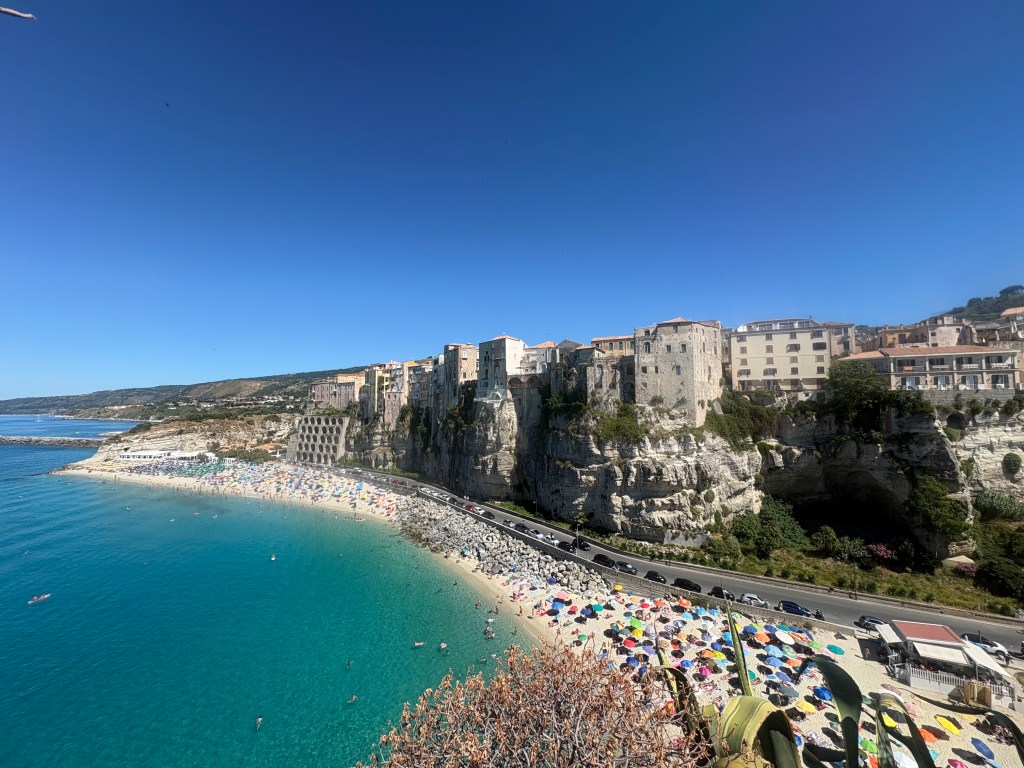
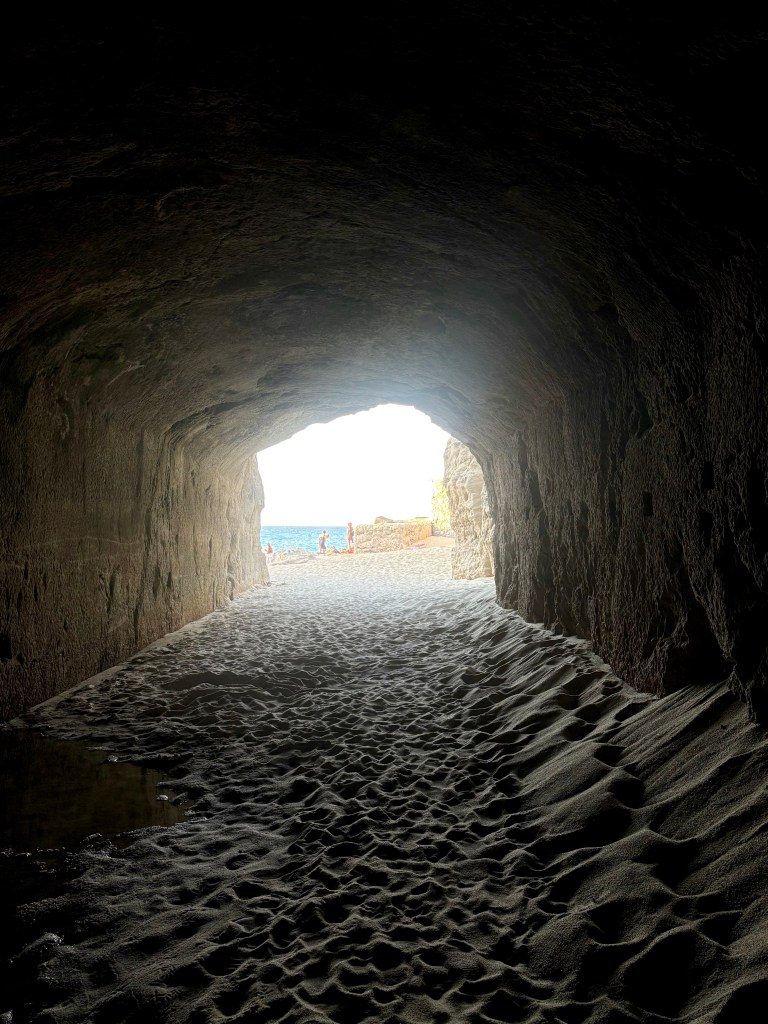
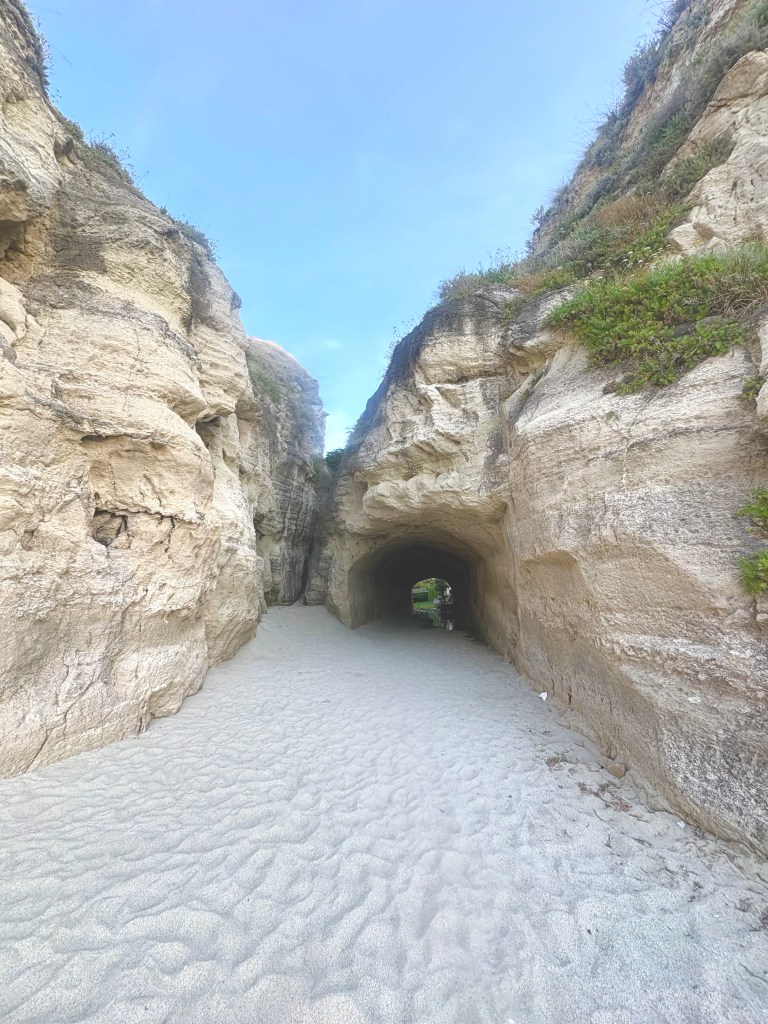
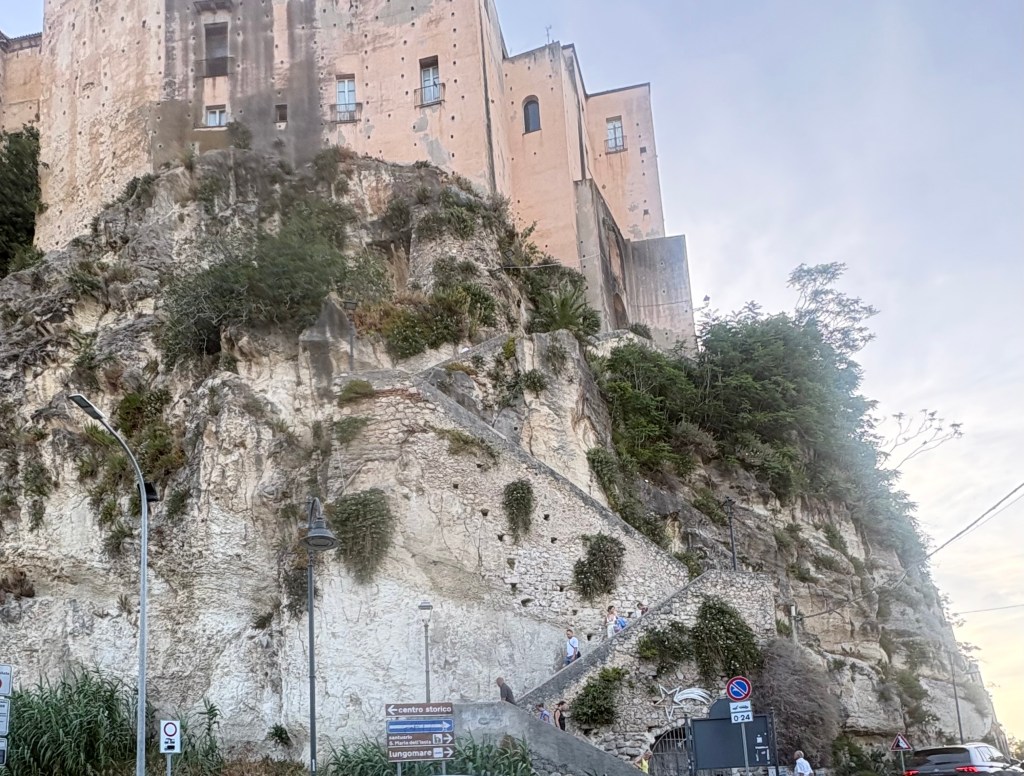
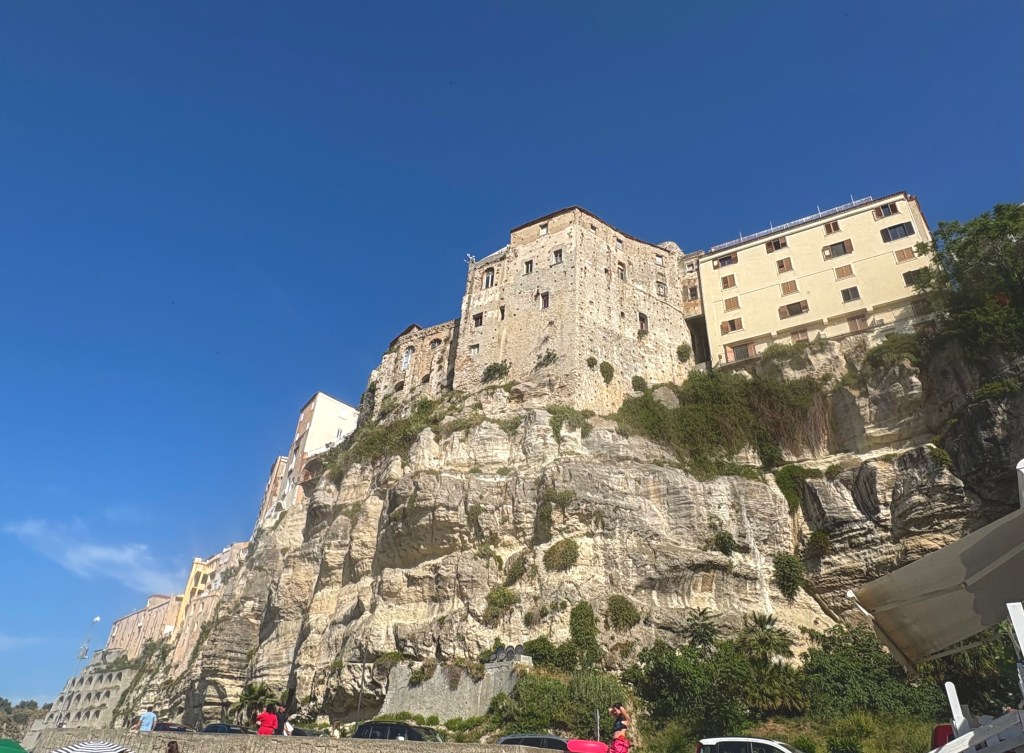
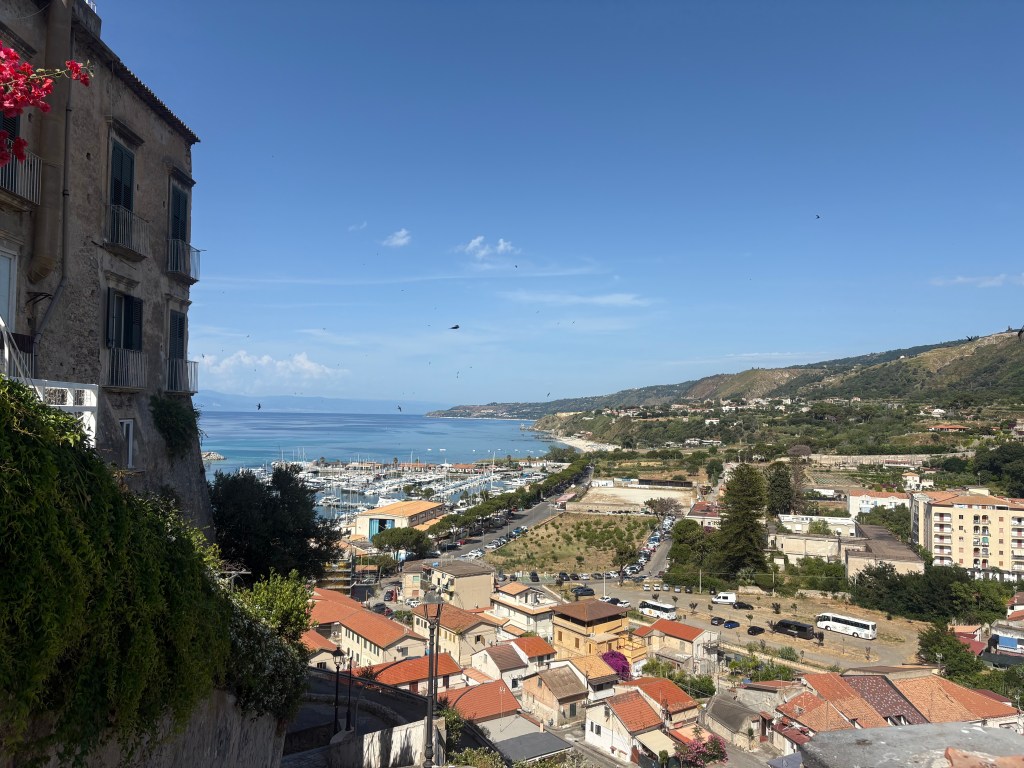
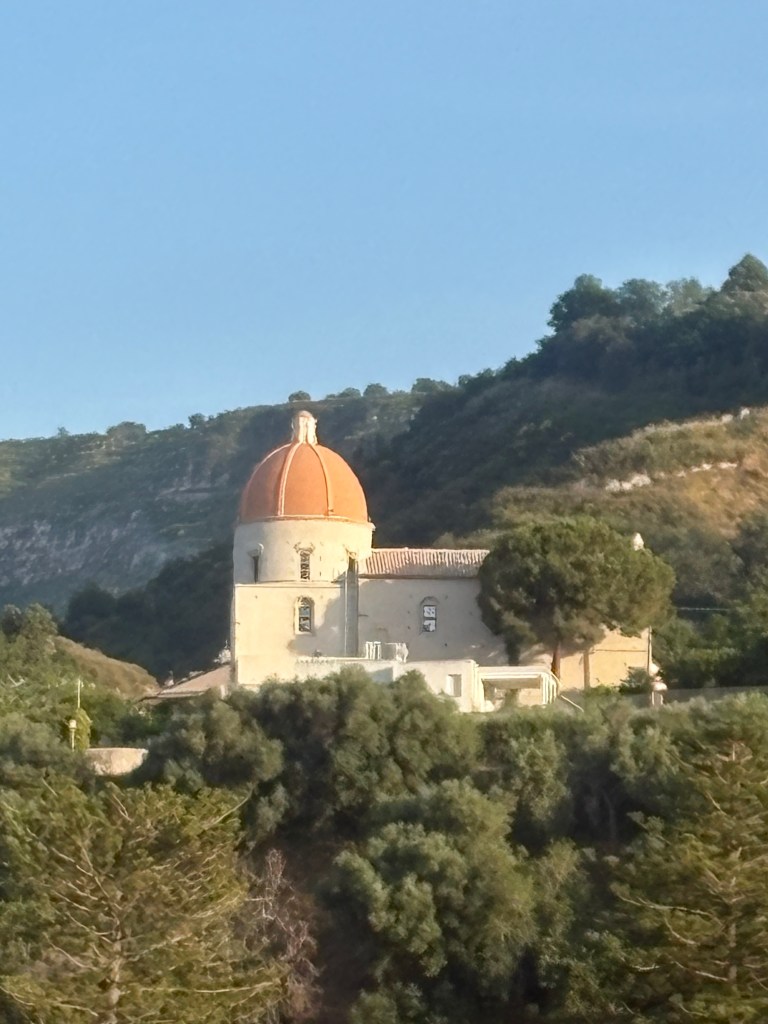
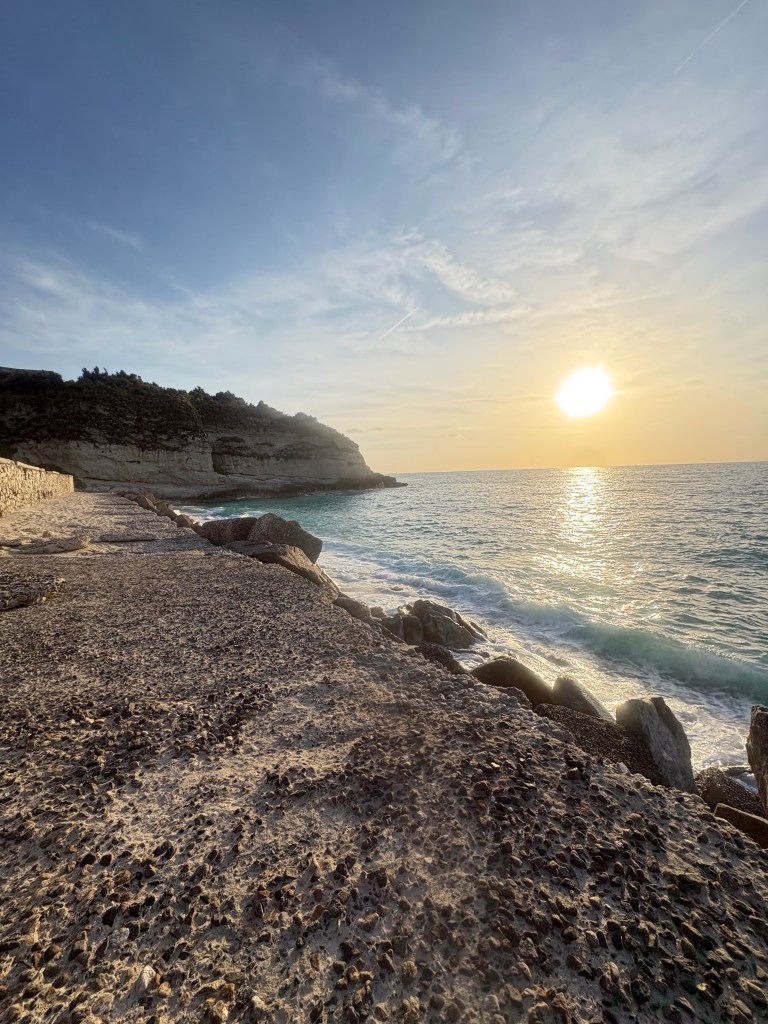
Enough already you say, you want to hear about Tropea. An ancient city built on cliffs shielded from the Tyrrhenian Sea. Because any of my seaside visits are classified under the Italian beach bum tour rather than heritage journey, the beach was first on my agenda. The pictures I’ve seen were not enhanced, the water is crystal blue and, as I mentioned in my past post, the sand is a granular white with pebbles and smooth stones lining the sea’s edge. The ocean carries itself in on a gentle rolling tide before hitting a crashing break when it meets the shore. The sun‑baked bodies line its beach from cliff to cave as the young teenage girls, as with anywhere in the world these days, pose for selfies on their phones and the young men carry out horseplay by the water’s edge. As if unaware of the sun’s wrath, the visiting hordes apply their tanning oils and glisten in the sea air, speaking loudly with exuberance, stirring an excitement in their conversation. The ocean is cold but invigorating as it shocks any bit of sweltering heat from your skin. I set eyes on the distant mountains before turning my gaze to the cliffs and studying the contour of the city that aligns its edge. A feeling of insignificance washes over me as I rise and fall with the rolling tide. The next few hours are consumed by napping on the beach as I drift in and out of sleep to the sounds of Italian, Danish, German, Swedish, and British accents echoing in the distance. The sounds of passing footsteps can be heard grinding in the coarse sand, muffled in the ear that meets my beach towel. A final refreshing dip as the sun sets behind the ancient Sanctuary of Santa Maria dell’Isola perched above the beach, and it’s time to navigate the long climb back to the center of town to ready oneself for an evening out.
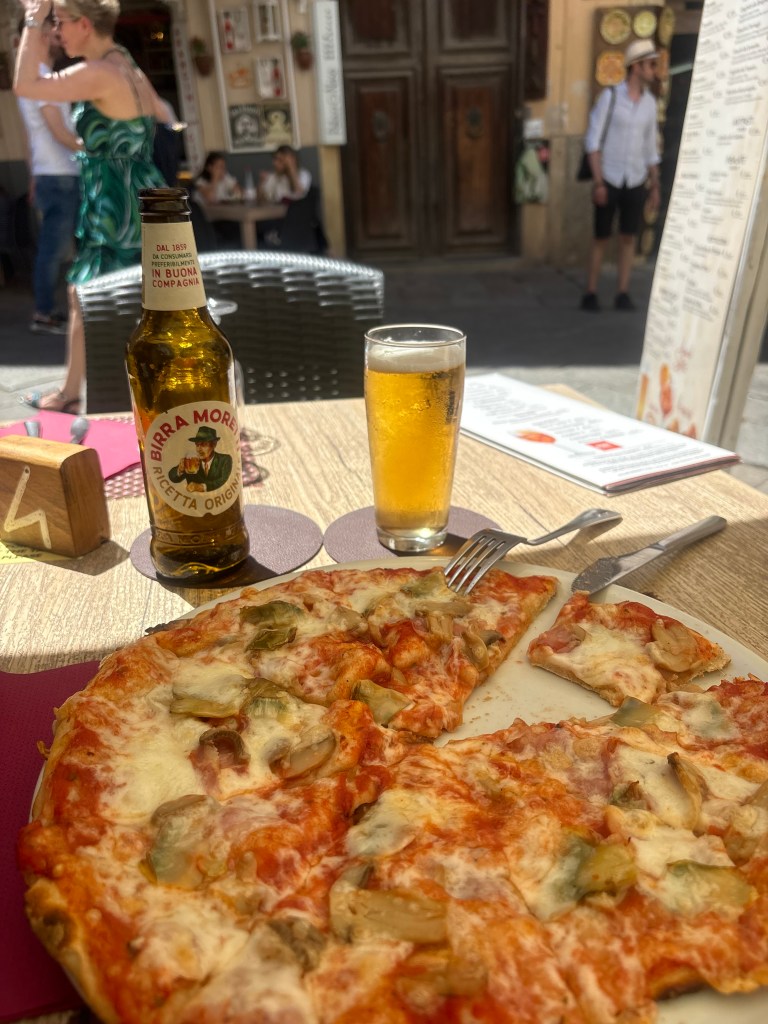
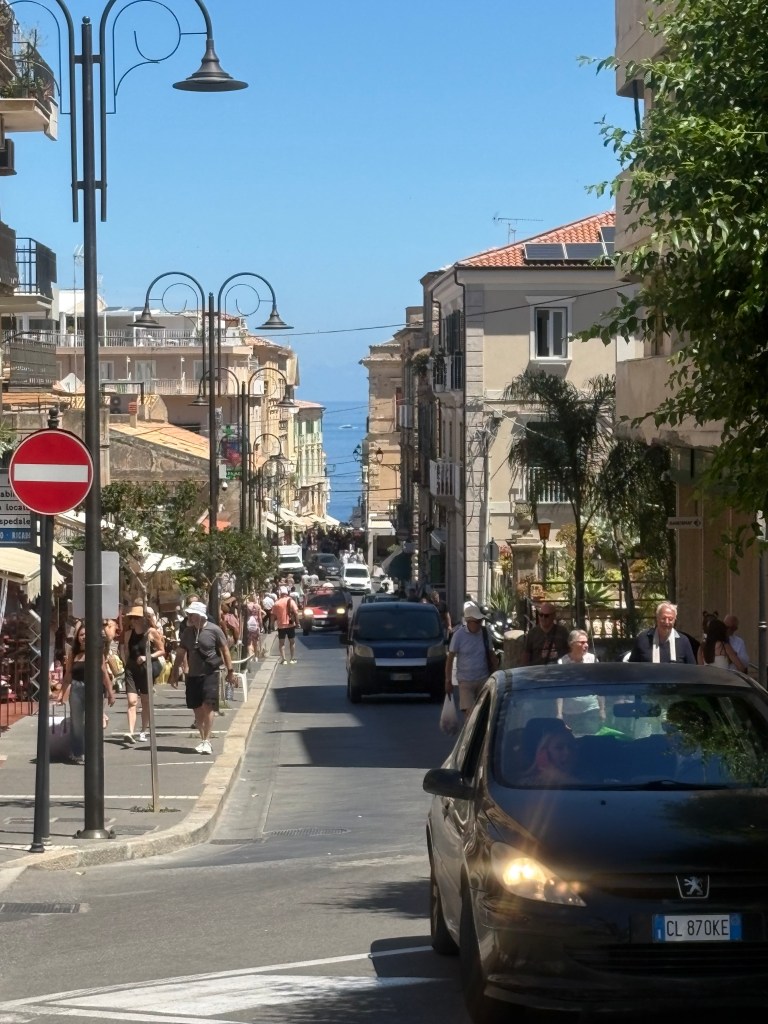
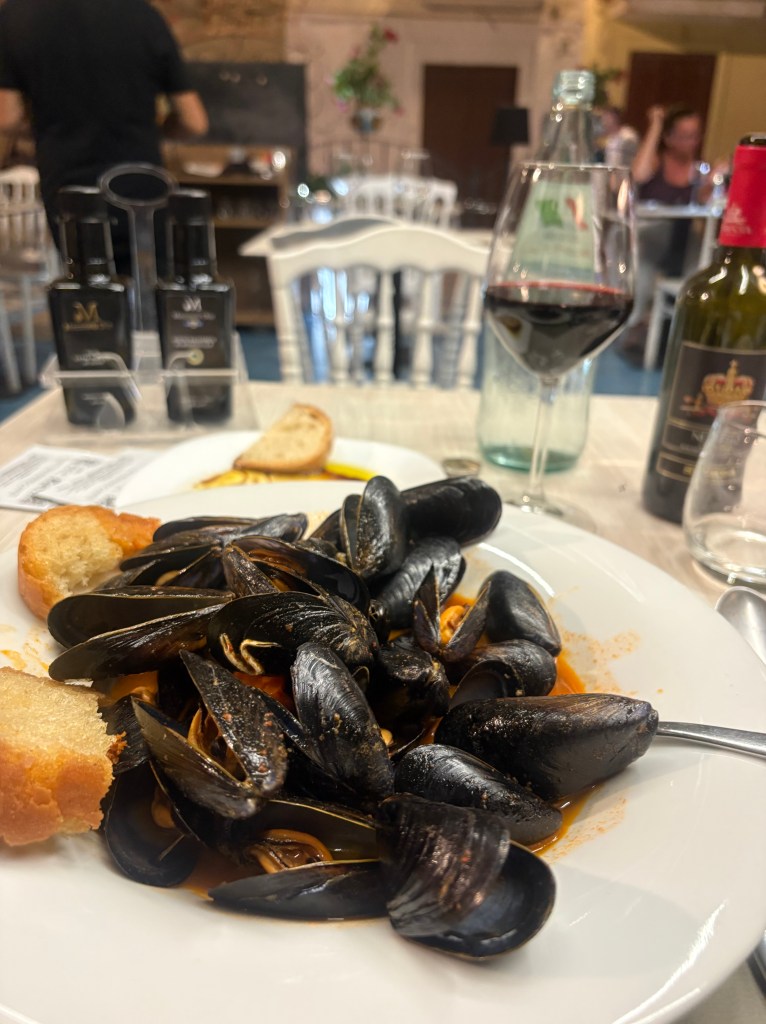
Entering the evening streets, they are still just as congested but not an annoying congestion. An alert crowd makes their way through the multitude of restaurants and shops, mainly scanning special boards and menus for their next meal selection. Small Italian cars creep through the crowd like a cowardly cat. Unlike upscale American restaurants, there is little deviation from the local dishes that Calabrian chefs refuse to deviate from. Besides some minor venturing outside the classic circle, each menu offers fairly the same fare: Caprese salad, mussels in garlic tomato broth, spaghetti carbonara, grouper-stuffed ravioli, and lasagna, just to name a few. Ironically, the special boards reflect existing menu items that must be their big draw. I was warned to stay away from menus with pictures. Just as in America, this denotes a lower-grade food offering. Under these circumstances of repetitive offerings, one must rely on one’s senses: the visual appeal and cleanliness of the restaurant, the ambiance, the clientele or their lack of, and the attentiveness of the staff. I will say Italy seems to be consistent with an attentive maître d’ who not only works the passing crowd for prospective diners but conducts his dining room like James Brown would conduct his band. Nods of the head, hand signals, quick but unpretentious quips all working as part of the instrumental flow of service. I return to my starting point at Alice’s Restaurant, which looked appealing and passes all the aforementioned criteria. Starting with a split bottle of local red wine and enjoying some of the tastiest mussels I have ever eaten, I then graduated to the spaghetti carbonara with pork cheek. I know, I went for the local fare that is reflected on every menu in the area. While I was expecting a tender braised pork cheek Americano style, it was more of a slightly chewy pancetta-style preparation, and while I would have preferred the melt-in-your-mouth “cheek to meet my cheek,” the egg and cheese sauce was delicious with the added flavor of the pork rendering. I had my dessert of gelato and coffee later that night in the center of town.
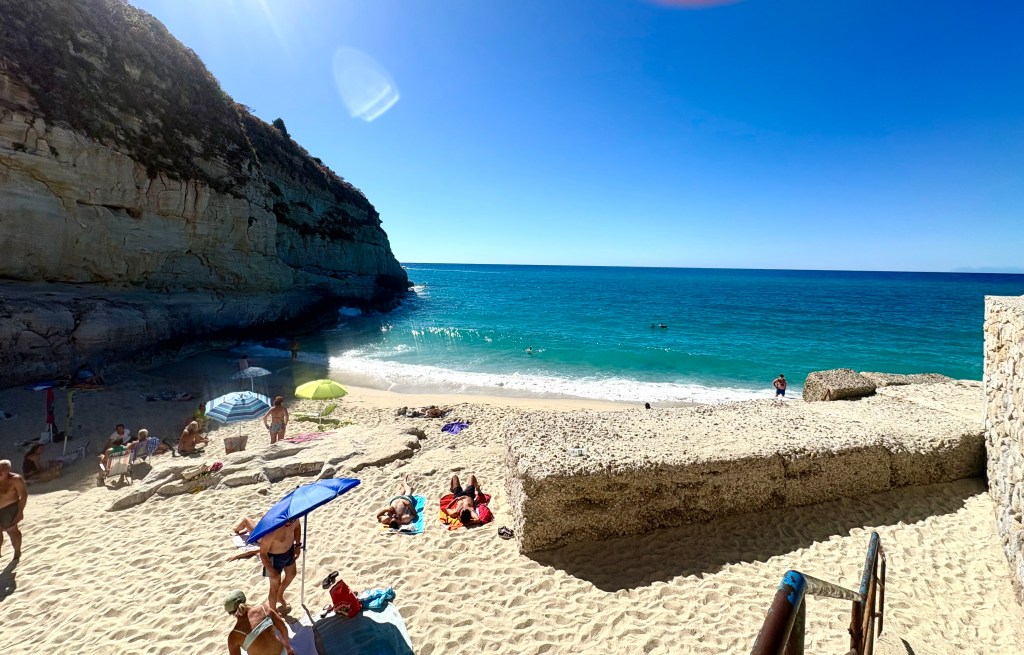
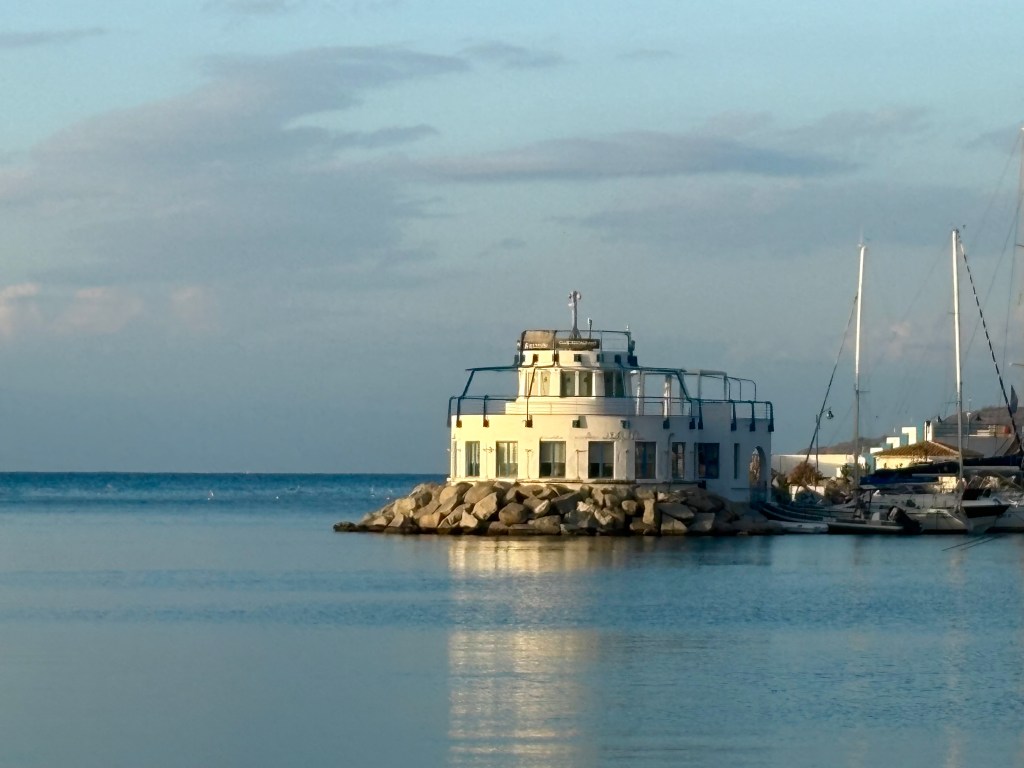
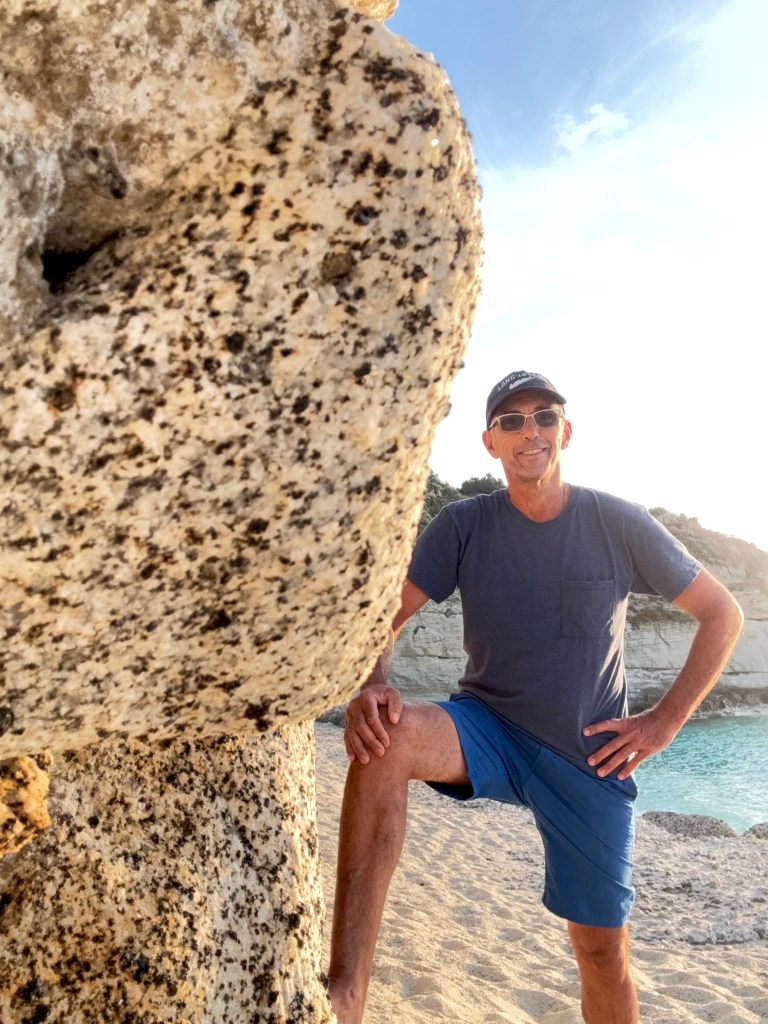
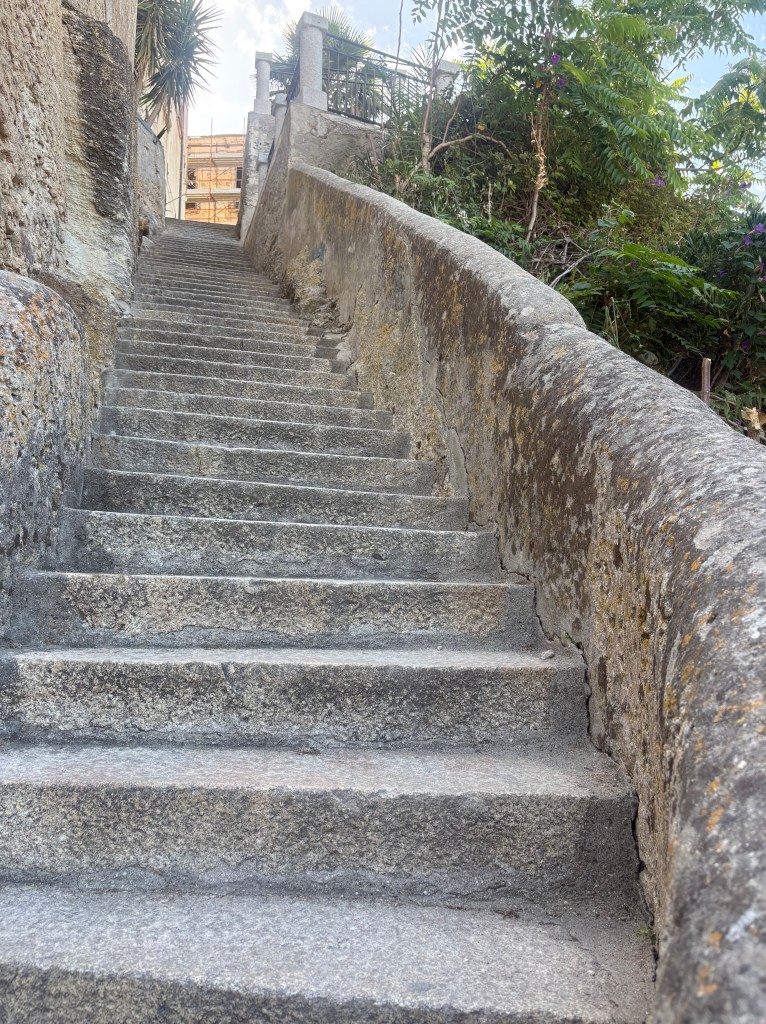
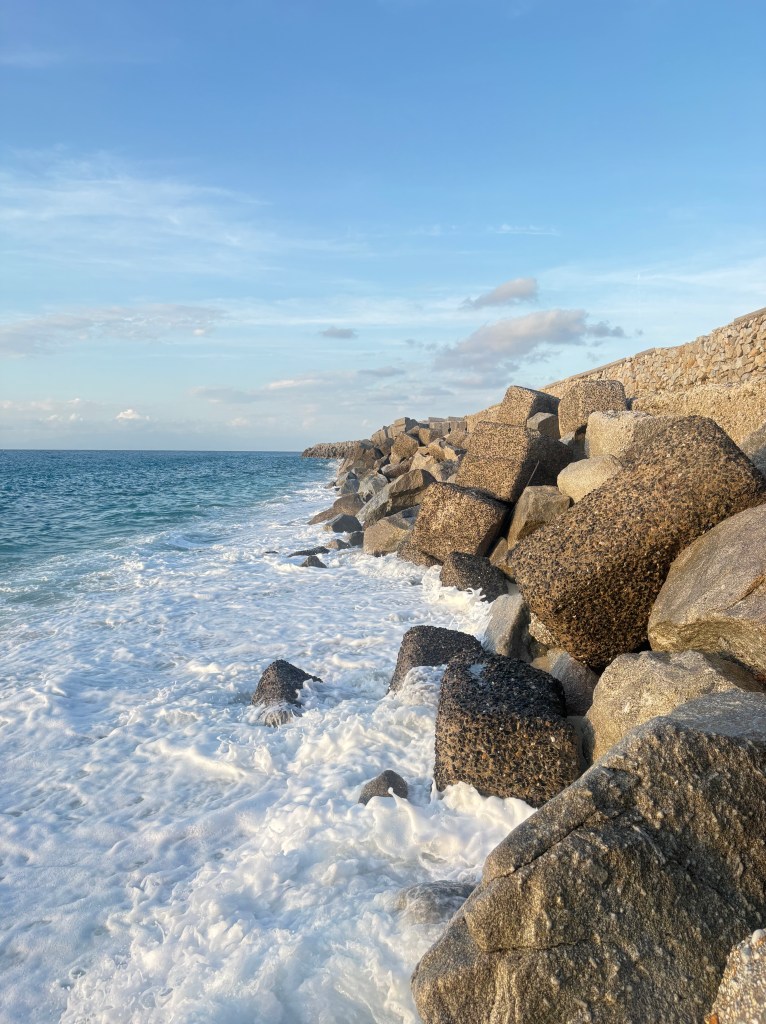
The following day would stay pretty consistent, this time venturing to a beach further down from where I was the previous days with a different view and a different ethnic makeup, as there was an RV lot nearby which seemed to bring in some Germans and French. They must be brave souls to venture an RV on these roads. Returning to my room later in the afternoon, I quickly freshened up and descended down the 185 back steps just behind my B&B which led to the marina. This is where I found the private beach tucked in beside a seawall on one side and a jagged cliff on the other. The water had a different temperament as it rippled its way along the rocks of the cliff on one side and crashed against the jetty of the opposing side. The sun had set enough to shadow the cove, which created a cool subtle breeze whisking through its narrow passage. It was definitely in the cards to return the following day, to which I spent the entirety after breakfast well up to nearly dusk.
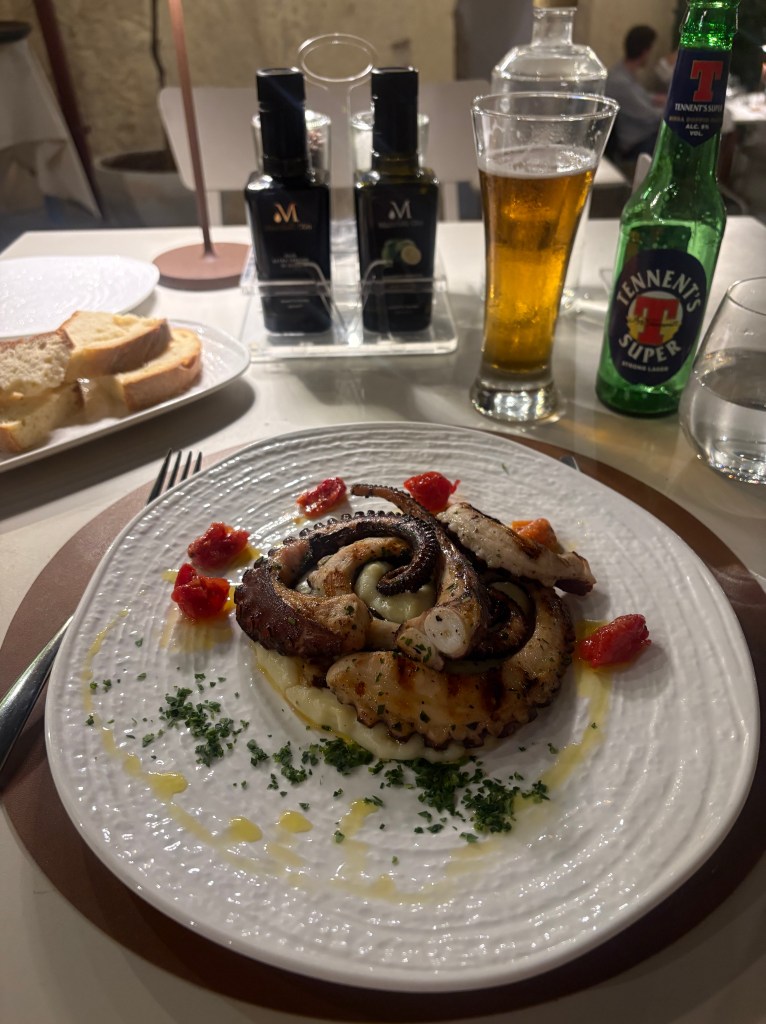
My second dinner was chosen before I was even seated. I shuffled from menu to menu with the rest of the curious prospective diners, and while previously gun-shy to try the octopus due to some negative reviews by past acquaintances at varying restaurants, I noticed one restaurant noted “twice cooked” on their menu, which in a chef’s mind would denote the first cooking should be a braise. I took a chance and enjoyed a tender grilled glazed polpo on creamy potato purée, which seems to be the classic steady accompaniment, and finished with some sparse oven-dried tomato garnish. The Restaurant Nonnarosa is located just off the main avenue, set up, as with nearly all the outdoor dining spaces, in an alley outside their modest dining room and kitchen area. As menus are displayed on the crowded avenue, it’s sometimes a gamble which restaurant an enthusiastic maître d’ might usher you into, so it’s safe to point to the menu you’re interested in before usually being handed off to the neighboring restaurant’s staff.
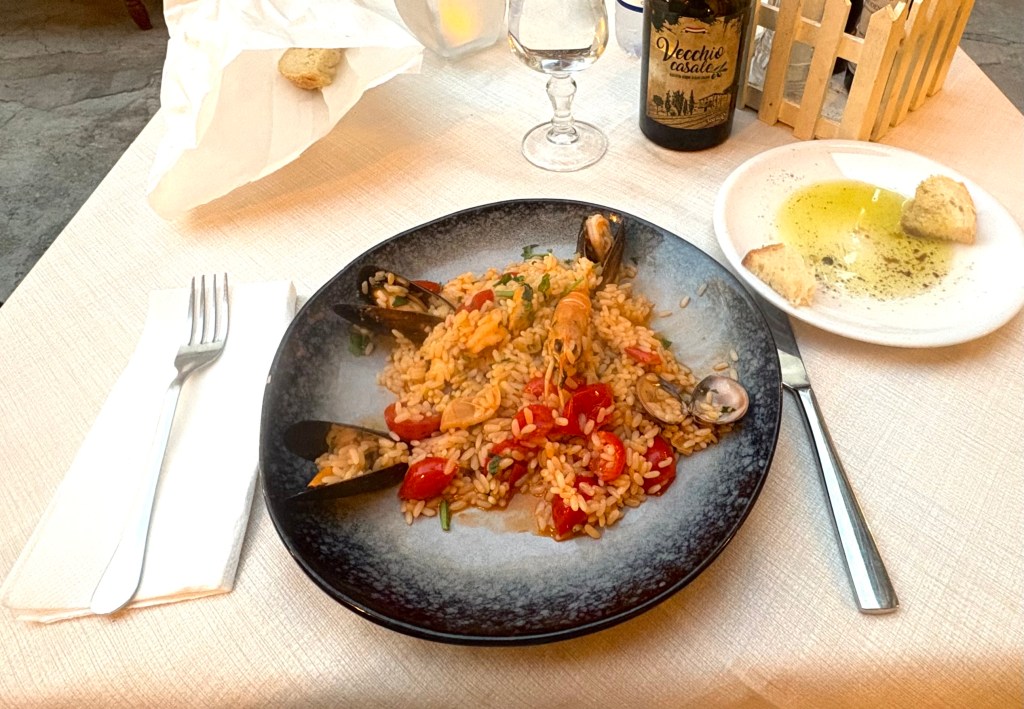
While my Saturday lunch only consisted of my bottled water, which I filled from the local well spigot in the center of town with the rest of the smart tourists, and a mortadella and provolone sandwich from the local panini shop outside my room, the evening meal hunt was on. Having eaten spaghetti and clams, lasagna, gnocchi, octopus, and select pizzas, to name a few, while in Italy, it was time for risotto di mare, and it didn’t disappoint. Starting the meal with a wood-fired eggplant Parmesan, the service was relaxed. Before my main course arrived, a young energetic boy came in with his sister, grandmother, and grandfather. With closely set tables comes conversation, to which the grandfather immediately initiated. He asked if I spoke Italian in his broken English accent, which surprised me, having heard the boy speaking in perfect English. As it ends up, the gentleman spent most of his life in Italy as an electrician but moved to Southern California in his later years to be closer to his daughter and grandchildren. His grandson Mateo told me of his fishing adventures in the States, and when I mentioned Costa Rica, he shared with me his pictures of all the mahi he caught on a past fishing trip. As the risotto arrived, the aromatic spices filled the table setting. Plump mussels, tender local shrimp, clams, squid, and a crawfish garnish tossed in tender vegetables and zesty risotto melded wonderfully. I resisted the urge to ask for grated cheese, as I had been taught that Italians frown on the practice of cheese on a seafood dish. In the end, it wasn’t necessary, as the dish carried itself. Mateo’s grandfather must have liked my choice, as he also ordered the risotto. Finishing with a disappointing tiramisu and “espresso,” which is just ordered as caffè in this neck of Europe. With a long day in the sun and now full belly, I walked the piazza and retired to my room early.
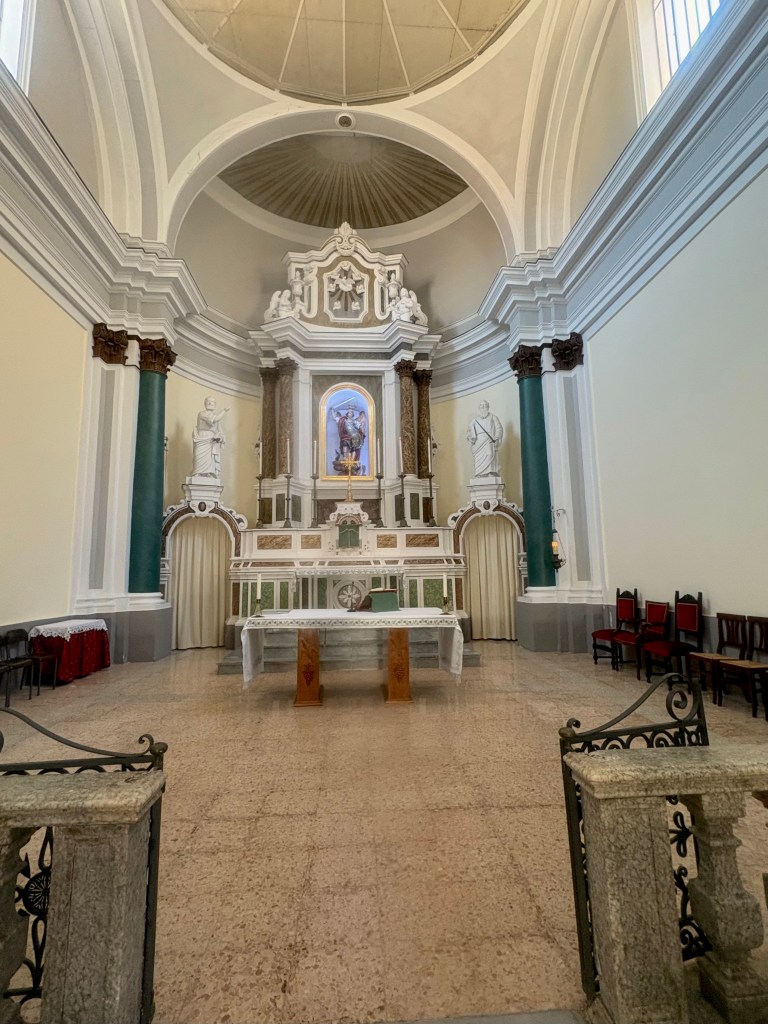
Sunday would bring a partial day of packing and organizing my things, planning my departure, and hanging in the piazza for a casual Sunday before heading over to visit the Sanctuary of Santa Maria, for which Tropea is famous. While there is no short supply of hotels, B&Bs, and rooms in the area, there doesn’t seem to be many restrictions or oversight. My hidden fourth-floor walk-up was modestly furnished and supplied with a skeleton key for the precarious locking pocket door. Just as my past two accommodations, random spotlights oddly lit the room where I assumed once sconce lighting must have existed. The complimentary breakfast was anything but complimentary, as it was an odd offering of cold fried eggs, room-temperature yogurt, salami, croissants, and chocolate swirl bundt cake, which was the highlight. Our hostess fixed coffee from the awkwardly placed espresso machine in the corner as she loudly greeted each guest with outflung arms, “Amore.”
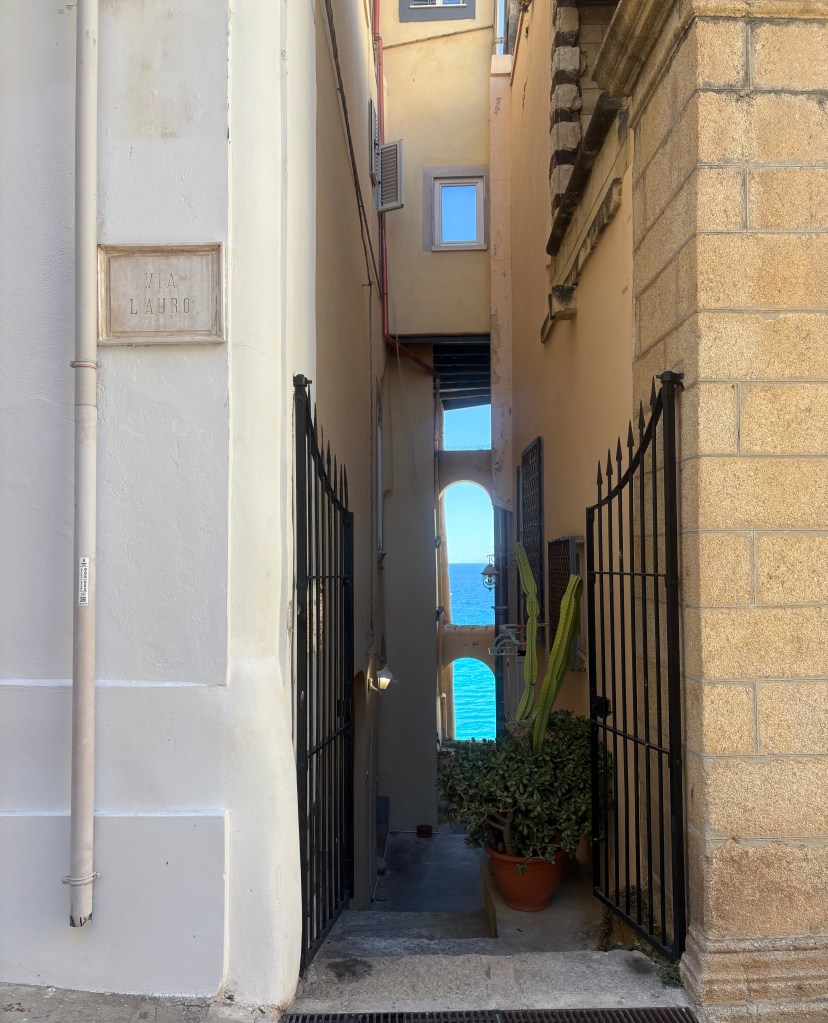
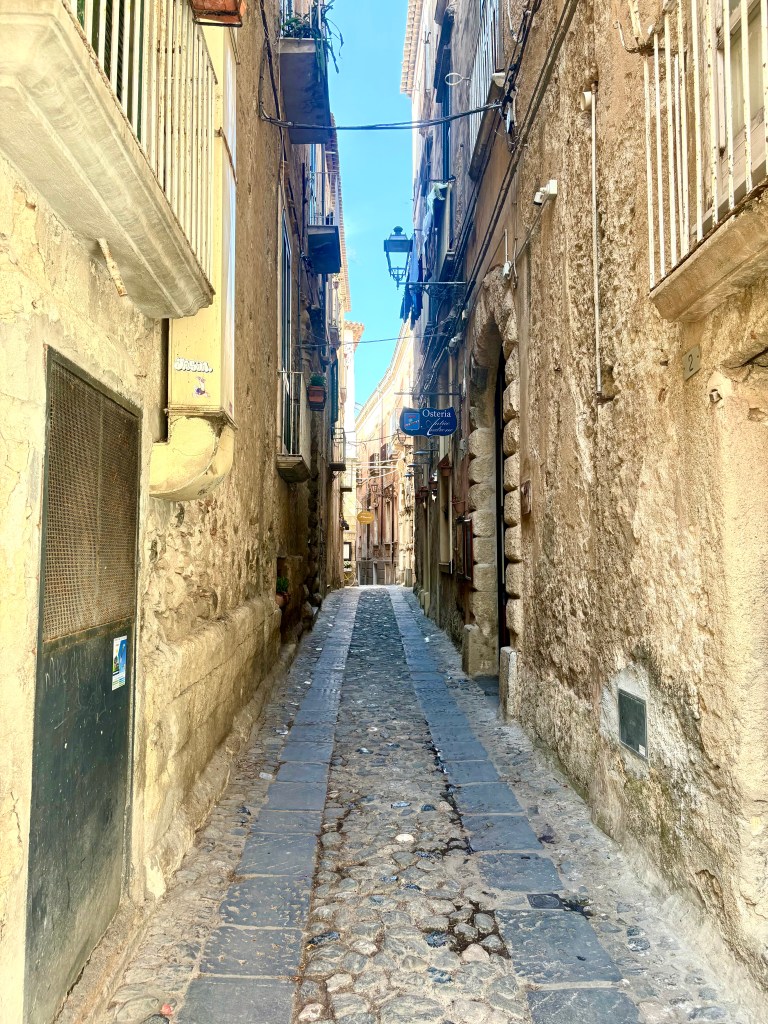
As I mentioned in the start of this writing, I work the streets to my advantage. After my first day in Tropea, I figured out most of the quaint back alleys that were not taken up by makeshift dining areas, and those alleys served as my express routes to avoid the crowded main thoroughfares. One must be cautious, though, when using the cut-throughs, as water basins are frequently just tossed out windows from the floors above. You learn quickly that all walkways can become a road when a driver decides it to be. And 80 percent of the time, when an Italian says they speak English, it’s similar to us thinking we can speak Italian until a conversation is initiated.
All in all, Tropea was a great visit. I have mapped out and timed my return walk to the train station, and my 9:30 train will deliver me to my first stop in Lamezia, where I switch lines to Battipaglia before hopping a bus to Potenza, where I pick up my rental car and proceed to Laurenzana, the birthplace of my grandfather Angelo Scavullo.