Ortona turned out to be one of those places that keeps shifting as you move through it. The train in followed the coastline so that was promising, and photos showed a waterfront town, but you wouldn’t have known it when the train pulled into the station. The rail stop consisted of four tracks and lay in a dusty armpit of a lot as if forgotten by the town. There seemed to be two exit options: an unpretentious road from the front of the station that must lead to town, and a similar road in the back of the station that seemed to run parallel, although separated by an embankment. Not knowing the area, neither looked particularly safe, but I chose the front entrance while I saw a few folks exit the back door.
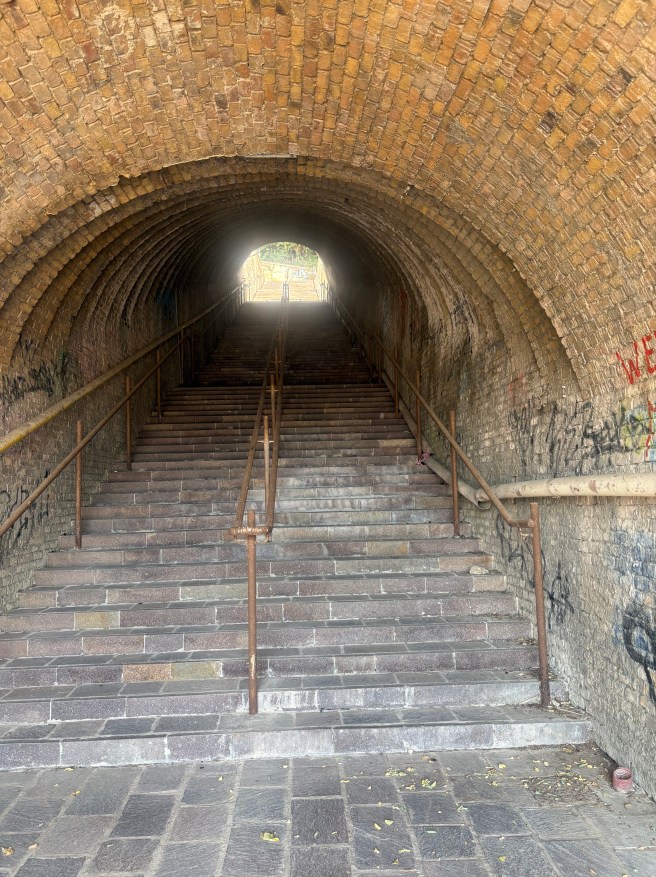
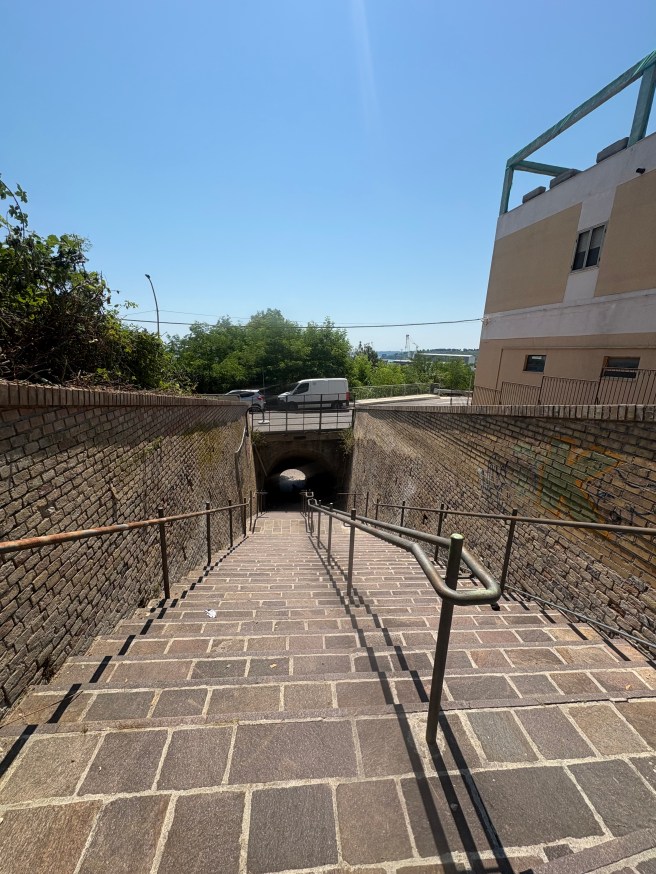
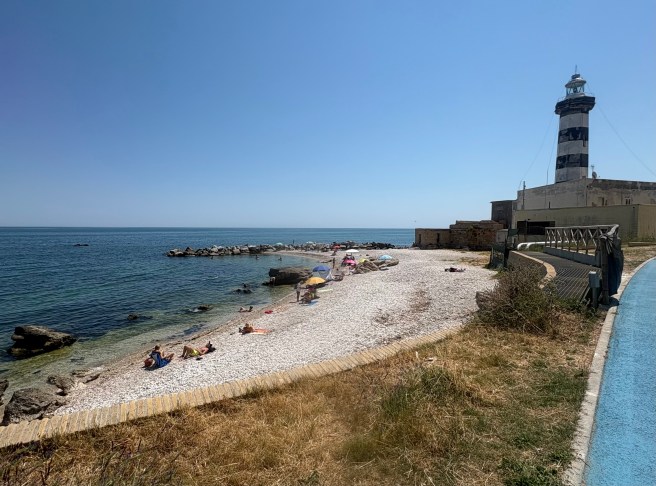
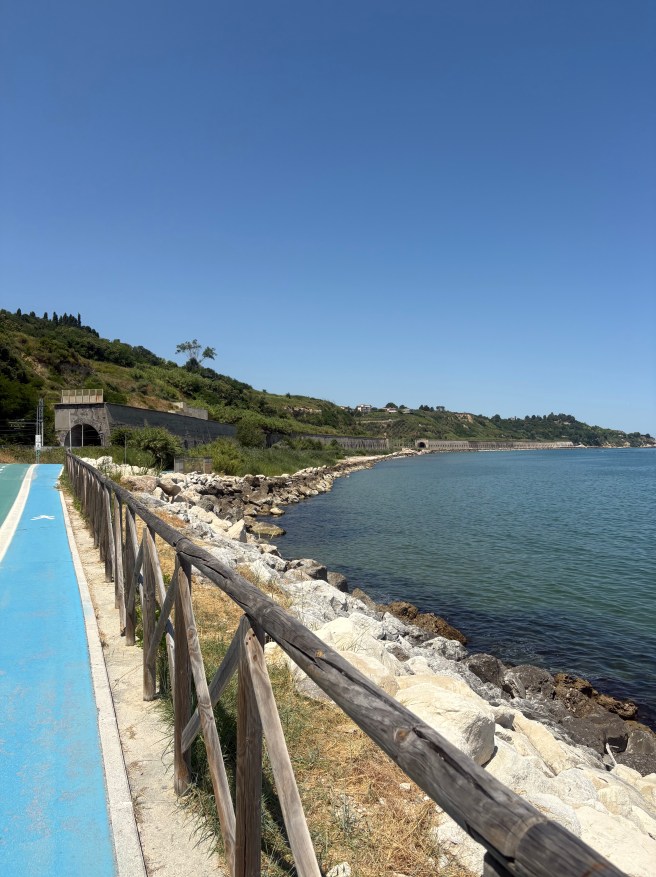
The road was no‑frills and barren for several hundred feet until I came to a tunnel entrance and stairs. I had arrived at an Alice in Wonderland / Matrix moment, do I continue down the barren road to what surely must lead to civilization, or do I take the unassuming staircase? As I approached the tunnel, I saw sunlight at the top of the steep stairs and proceeded with confidence. As it turns out, I wound up on an incline road that overlooked a coast guard station, marina, and small port in the distance. Proceeding further, there was a bike rental company just at the fork of the marina and a road that curved toward the unknown. Yet another long flight of stairs went up to the overgrown hills. Having had my immediate fill of stairs for a while, I proceeded around the corner to find a small rocky beach with sunbathers uncomfortably perched on boulders and fist‑size rocks. The water was choppy around more submerged rocks, and some bathers were half‑pitched over, cautiously navigating the rocky ocean floor. Beyond the beach, a long waterfront path stretched the coastline for miles with painted lanes designating bike lanes from pedestrian lanes. A curving road lay close by, disappearing in and out of tunnels in the distance. With the water stretched out on one side, cliffs perched on the other, and the continuous ribbon of sun‑baked path in front of me, I felt as if I had gotten out at the wrong stop.
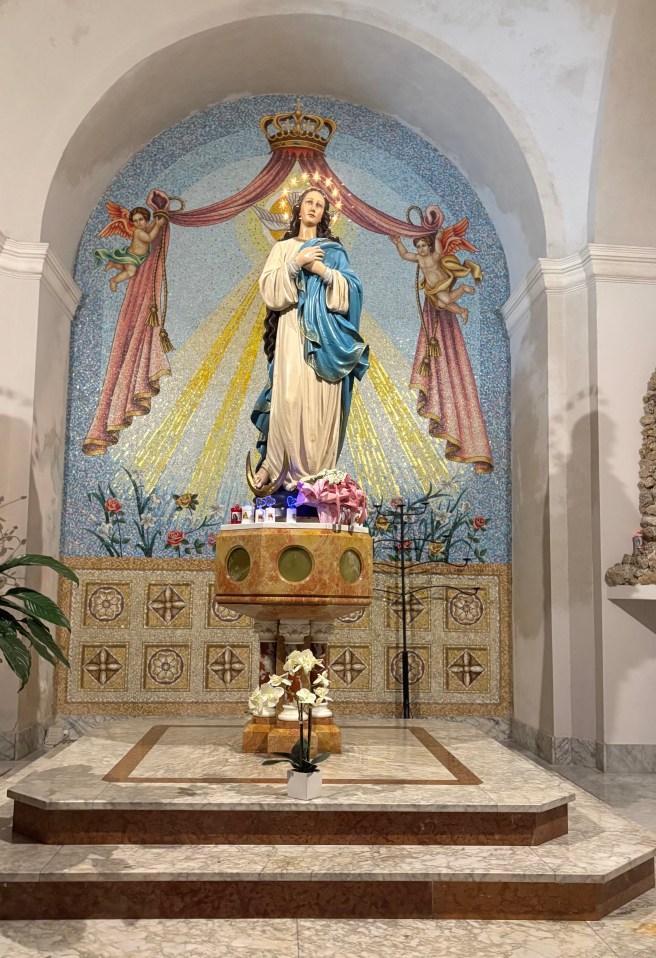
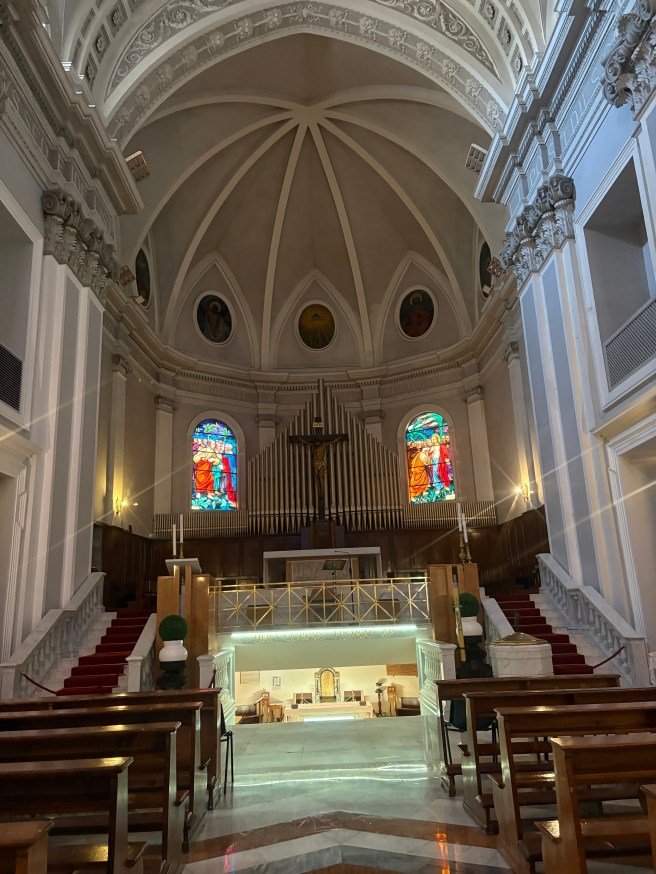
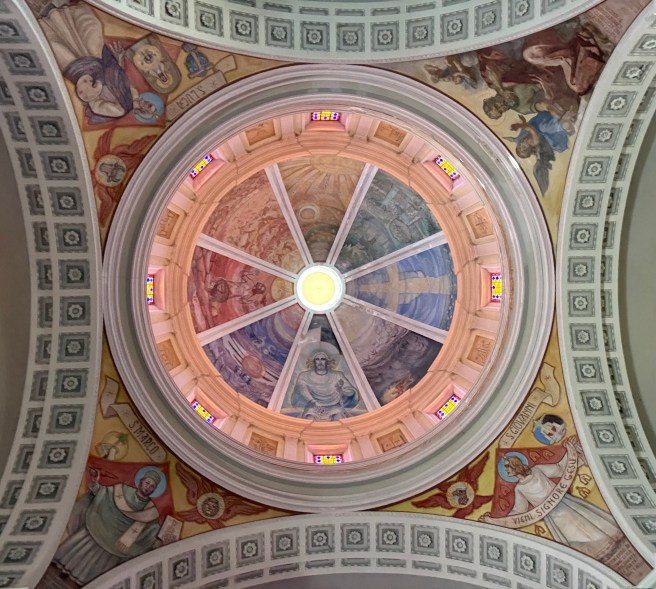
Before I got too far down the path, I came across a set of stairs cut into the side of the hill. My options were limited, but I saw the promise of a castle‑like structure atop the hill. Climbing the stairs, suddenly I was just where I needed to be: the castle on the edge of town. With some areas wrapped in scaffolding, the unpretentious castle of a time gone by lay half staring out over the Adriatic like it has been guarding the coastline for centuries. A restaurant overlooking the cliffs gave signs of civilization, and a large historic church started to peek around the corner as I proceeded. Arriving at the church thats claim to fame is to hold the relics of St. Thomas the Apostle, the town revealed itself through small streets and Italian‑style alleys.
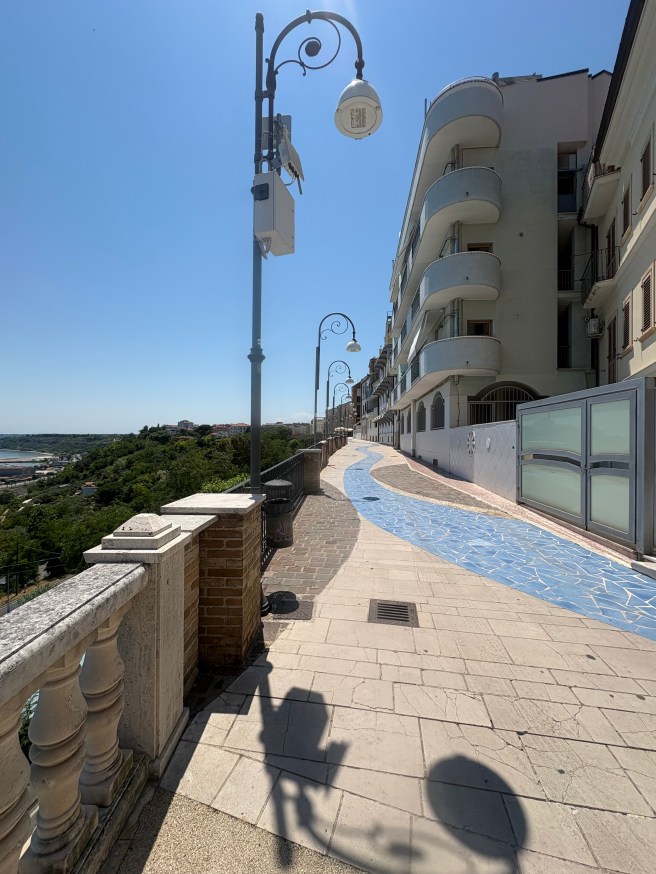
Renovations were happening everywhere: fresh stonework, new facades, and farther in town a finished stretch of elevated waterfront walk that hints at what the town was becoming. Even at mid‑day on a hot Saturday, when everything is deep in siesta mode, you can see the restaurants readying for the night, tables baking in the hot summer sun waiting for the crowds that accompany the night. As I am unfamiliar with the area, I can only speculate that this town, like any other Italian town, is transformed into a gastronomic culinary mecca at dusk, drawing the locals from their familiar confines to eat, drink, and enjoy their own company.
Somewhere in all of that, Ortona gave me a strange flash of Great Neck, New York, where I was born — somewhat in how it looks and even more in the way it unfolds quietly, almost shyly, until you realize there’s more here than you expected.
For a Saturday, it was somewhat barren, with many shops and restaurants closed, while the many cafés were clearly saving their energy for the night crowd. I walked the city snacking on some backpack‑temperature leftover pizza and fruit I bought at the local market. I found shade at one of the only cafés open on the main piazza and drank an espresso and beer in what felt like a ghost town.
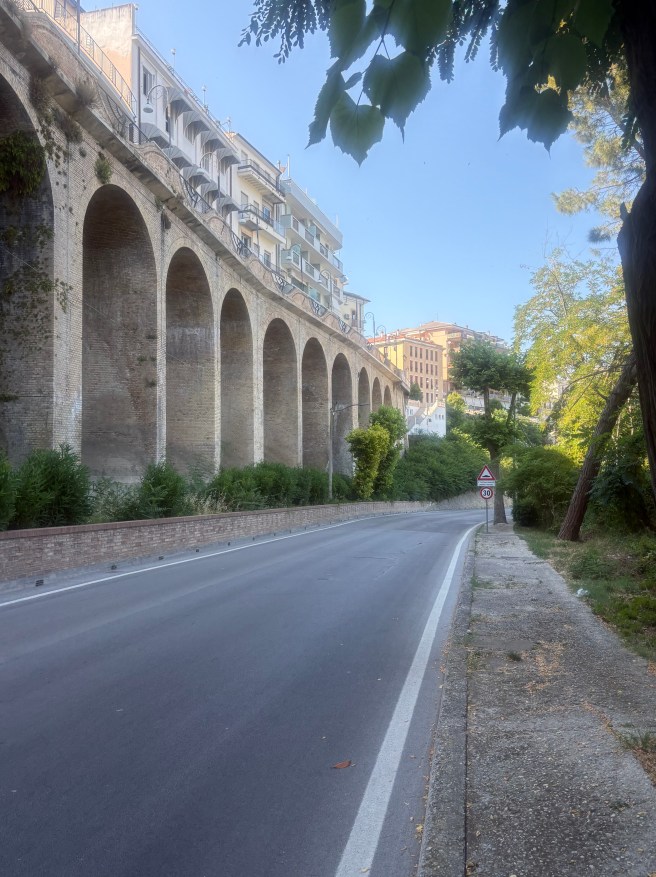
While I had planned to stay into the evening, I reconsidered as the town had already slipped into classic Italian mid‑day mode and the few shops and cafés that were open were shutting down for their traditional two‑hour break. I adjusted my ticket online to depart an hour earlier, which would get me back to Pescara at around 6 pm. Negotiating the long walk down to the train station wound up more of a challenge than expected, as many promising turns ended up dead ends or landing me in locals’ backyards. Finally finding the Alice in Wonderland tunnel, I made it to the train station in plenty of time.
All in all, the town of Ortona was charming, a quiet little town tucked along the seaside, proud of its past with an eye on a bright future. If there was a better beach option, I could consider staying here for a couple of days.